How Many Days in Sedona Is Enough?
Two days covers the icons, three adds the Verde Valley properly. A worked day-by-day itinerary, what each extra day costs, and how to compress it into one.
 By Patricia Collins, Sedona wine tour specialist & Verde Valley experience guide
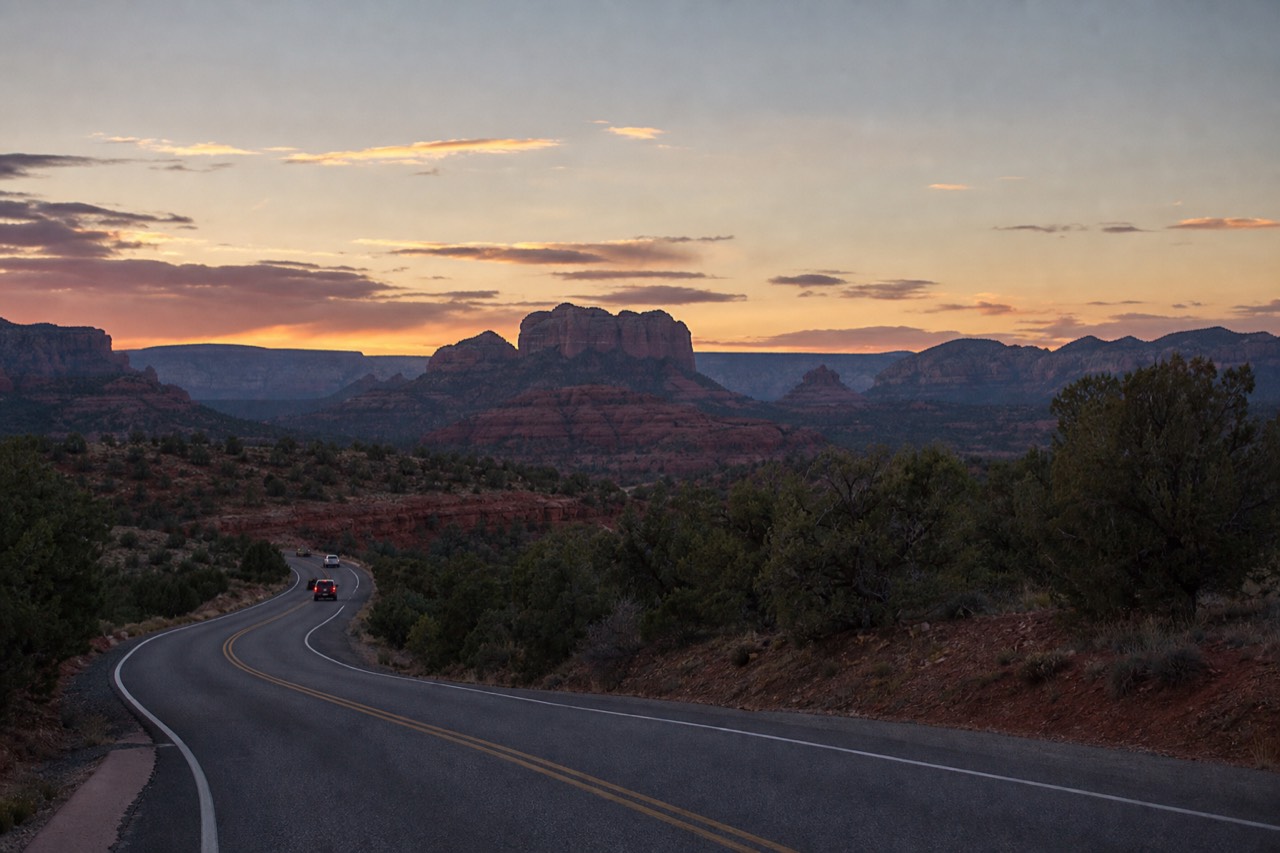
The most common planning mistake I see is a Sedona trip that budgets two nights and then spends most of the first one on Interstate 17. Arrival day is not a day. It is a drive, a check-in and a dinner, and if you count it as one of your two, you have really booked a one-day trip with extra laundry.
Start the count from your first full morning. Everything below does.
How many days do you actually need in Sedona?
Two full days is the honest minimum and covers the icons: the Chapel, a golden-hour viewpoint, one vortex site and a red rock morning. Three days is the sweet spot, because day three is when the Verde Valley wine country stops being a rushed afternoon. Four or more only earns its keep if you are adding Jerome, the railroad or a festival date.
Sedona takes more than four million visitors a year, and the town's whole geography works against the rushed version. Everything worth reaching sits 20 to 45 minutes apart on two-lane roads that get slow at exactly the hours you want to be on them.
| Trip length | What fits comfortably | What you give up | Best tour fit |
|---|---|---|---|
| 1 full day | One anchor plus one free stop | The valley, or the rocks, pick one | 3-hour express tasting run, $79 pp |
| 2 full days | Chapel, a viewpoint, one vortex site, a half-day activity | A proper wine day, Jerome, the railroad | 3 to 4 hour vortex-and-vineyards morning |
| 3 full days | All of the above plus a full Verde Valley day | Jerome, unless you cut something | 5 to 7 hour tasting run, or a private vehicle |
| 4 to 5 days | Jerome, the railroad, a second valley day, real downtime | Very little | Private custom day plus a shared run |
The shape of that table is the argument. Days one and two buy you the postcard. Day three buys you the part of the trip you will actually describe to people afterwards.
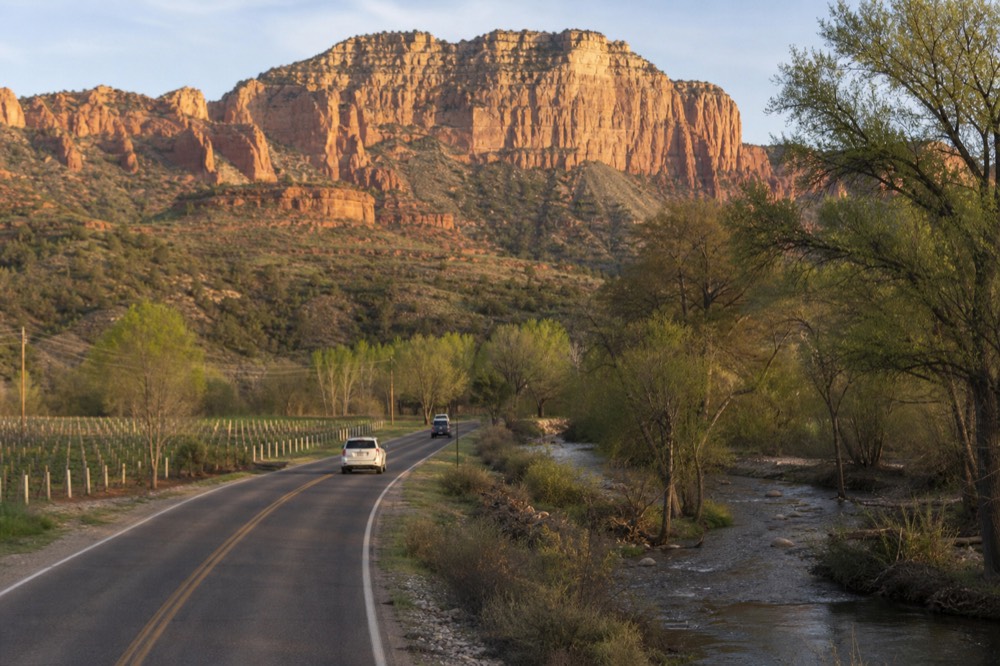
Is one day in Sedona enough?
It can be, if you pick a single anchor and stop pretending you will get the rest. A one-day trip works as either a red rock day or a valley day, never both. The compressed wine version is a three-hour express run to two vineyards including Javelina Leap, from $79 per person with a charcuterie board, which leaves your morning and evening free.
The express format exists precisely for this. Three hours, two stops, back in Sedona with the afternoon intact. I will be straight about the evidence though: that listing carries a single traveller review, so there is no meaningful rating to quote. Book it for the format and the price, not for a score. You can check the current departure times on the express run and see whether the three-hour window fits around your other plans.
The other one-day route is to skip the valley entirely, take the Chapel at opening, a viewpoint at golden hour and a flat hour at Tlaquepaque in the heat of the afternoon. That version is covered in the honest must-do shortlist, and it is a perfectly good day. It is just a different trip.
If you are coming up from the valley below, the drive alone eats a chunk of it: Phoenix or Scottsdale to Sedona runs about two hours in normal conditions, more right now. The feeder routes from Phoenix and Scottsdale go into which departure times survive that.
What does a two-day Sedona trip look like?
Day one takes the rocks: Chapel of the Holy Cross early, a slow lunch, a viewpoint at golden hour. Day two takes one half-day activity in the morning and leaves the afternoon open. Two days covers the icons but forces the Verde Valley into a three or four hour window instead of a real day.
The compromise that works best at two days is the vortex-and-vineyards morning, because it does two jobs at once. Three to four hours, a prickly-pear mimosa to start, a vortex stop with a personal reading, then D.A. Ranch and Javelina Leap and the airport overlook. It holds a 4.8 across 206 travellers, which is strong for a hybrid format. It is not a full wine day, and it does not pretend to be.
What two days genuinely cannot absorb is Jerome. Forty-five minutes each way on switchbacks, plus the time you will want up there, turns it into most of a day. Leave it.
What does the third day actually buy you?
A whole day in the Verde Valley without watching the clock. That means four wineries instead of two, an actual sit-down lunch, and the option of Old Town Cottonwood or Jerome on the back end. The AVA runs to roughly 200 square miles with 24 vineyards and 11 wineries, and a three-hour visit samples a fraction of it.
Here is the worked version, with the wine day sitting on day two so nobody is driving on arrival or departure day.
| Morning | Afternoon | Evening | Fixed costs | |
|---|---|---|---|---|
| Day 1 | Chapel of the Holy Cross at opening | Tlaquepaque courtyards, out of the heat | Golden hour at a red rock viewpoint | $5 Red Rock Pass, or $20 annual |
| Day 2 | Pickup for the Verde Valley, first winery by 11 | Two or three more wineries, lunch between pours | Back in Sedona, in-town tasting room | Guided run from $109 pp, or $469 per private vehicle |
| Day 3 | One vortex site, on site by 8 am | Old Town Cottonwood, or Montezuma Castle | Departure, or the Saturday-night grape train in season | Site fees only |
Two details make that itinerary work rather than just look tidy. First, Page Springs Cellars stays open until 8 pm Thursday through Saturday and closes at 6 pm the rest of the week, so a late finish is only available in the back half of the week. Second, Alcantara Vineyards is open daily from 11 to 5 and takes tastings without a reservation, which makes it the reliable fallback when a plan slips.
For a group of up to six that wants the whole day shaped around its own pace, the private vehicle option runs five hours door to door across Cove Mesa, Javelina Leap, Alcantara and Oak Creek Vineyards at $469 for the group, and you can see which dates that private vehicle still has open. Divided six ways that is under $80 a head, which is the arithmetic most people never run. The rest of the private door-to-door options compare on group size and stop count.
What does each extra day actually cost?
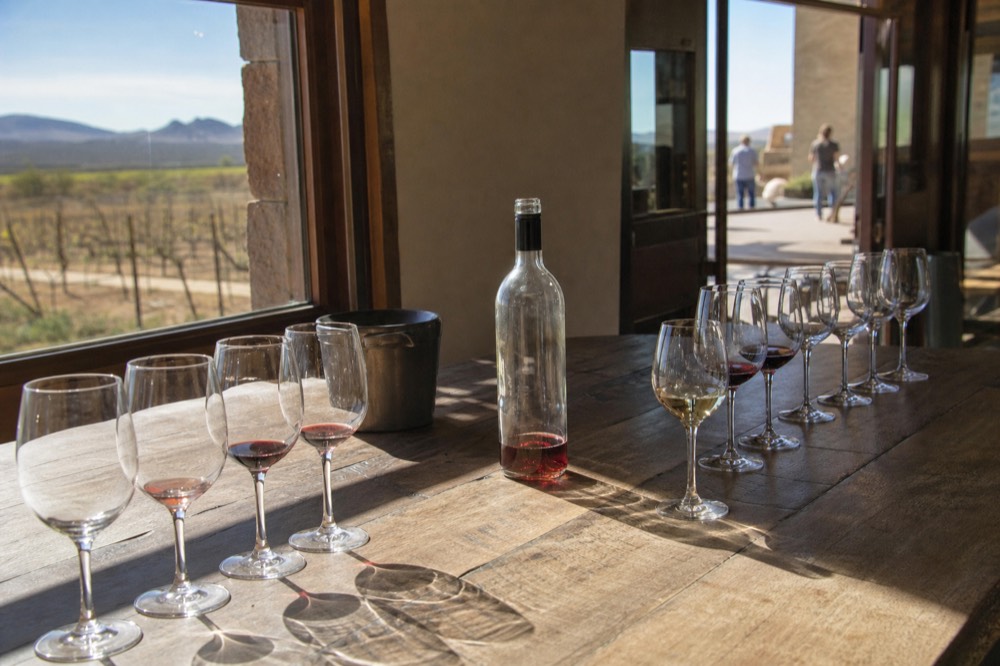
Less than people budget, once you separate the fixed costs from the variable one. Parking is $5 a day or $20 for the year, so the annual pass pays for itself on day four. Winery experiences run $30 to $57 per person. Lodging is the only line that moves hard, and it moves by season and by night of the week rather than by how many days you stay.
I am not going to quote you a nightly rate, because Sedona's rates move so much between a February weekday and an October Saturday that any single figure would be misleading by the time you read it. What I can tell you is which way the lever points: midweek is materially cheaper than weekend, and staying down in the valley near Cottonwood costs less than staying in Uptown, at the price of a 30-minute drive to the red rocks each morning.
The fixed side is easy to plan around. A $20 annual Red Rock Pass instead of four daily ones. Tasting experiences at $39 to $57 at Page Springs Cellars, $55 at D.A. Ranch, $30 for the Merkin Hilltop barrel room. A guided tasting day from $109 per person, or $199 if you want every fee and lunch folded in so nothing surprises you at the counter.
The road work is worth planning around rather than worrying about. The City of Sedona posts the current I-17 and SR 179 construction notice, and the practical answer is to arrive outside peak hours and to stop counting arrival day as a touring day.
When are four days or more worth it?
When your dates hit something fixed, or when you want Jerome without sacrificing a wine day. Four days lets you add the hill town, the Verde Canyon Railroad, or a second valley day at a slower pace. Two dates in particular justify the extra night: the Verde Valley Wine Festival on Saturday, May 9, 2026, and the Saturday-night grape train season from June 6 to September 12.
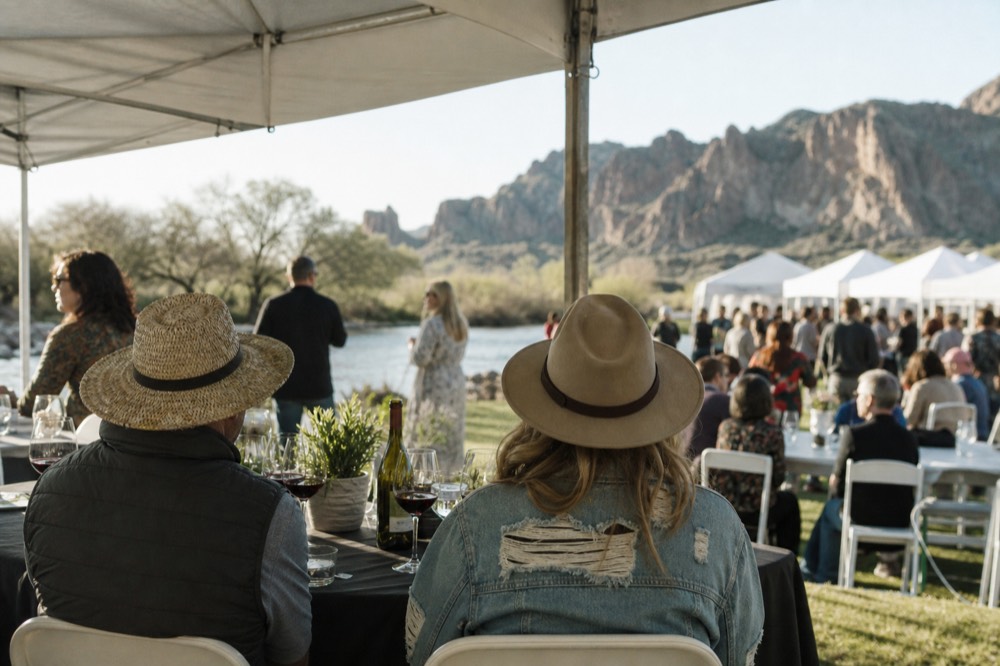
The festival runs 11 am to 6 pm at Riverfront Park in Cottonwood with more than 20 wineries pouring, and it took the 2025 Arizona Travel Award, so it is not a small local affair. If your trip brushes that weekend, build around it. The organisers post the main event details and hours each year.
The railroad is the other fixed date. The Grape Train Escape only runs on summer Saturday nights out of the Clarkdale depot, four hours in a first-class car with Southwest wines paired to cheeses and winemaker commentary. A trip that includes a summer Saturday and does not use it is leaving something on the table, and the full railroad breakdown explains which car class is worth the difference.
Season also decides whether four days is comfortable or brutal. August afternoons rearrange any itinerary, and harvest changes what the tasting rooms are actually doing, both laid out in the month-by-month tasting calendar.
Which day should be the wine day?
Day two on a three-day trip, day two on a four-day trip, and the middle of any longer stay. Never arrival day, because you will be tired and the pickup windows start early. Never departure day, because the runs go five to seven hours and finish back in Sedona at an hour that does not respect a flight.
There is a second reason to put it in the middle: by day two you have seen the red rocks, so the valley reads as a contrast rather than a downgrade. Visitors who do the wine day first sometimes spend it comparing the scenery to the postcard they came for.
Weekday over weekend if you can choose. Many Verde Valley wineries recommend or require reservations, especially for weekends and groups, and tour seats go the same way. A Tuesday tasting room is a different, better place than a Saturday one.
For groups who want the stop list built to order rather than fixed, the custom private format covers three or four stops across four to six hours from $195 per person, with Page Springs Cellars, Alcantara and D.A. Ranch as the usual shape, and you can see how that custom itinerary is priced before committing. If a fixed route suits you better, every shared tasting run compared is on the homepage, and for the days when nobody wants a trail at all, the non-hiking version of Sedona has the full priced list.