Sedona Vortex Sites and a Verde Valley Wine Day, Paired Properly
Two things bring most people to Sedona: the red rock energy sites and the wine that grows twenty-five minutes downhill. Doing both in one day works, but only if you get the order right.
 By Patricia Collins, Sedona wine tour specialist & Verde Valley experience guide
Short answer
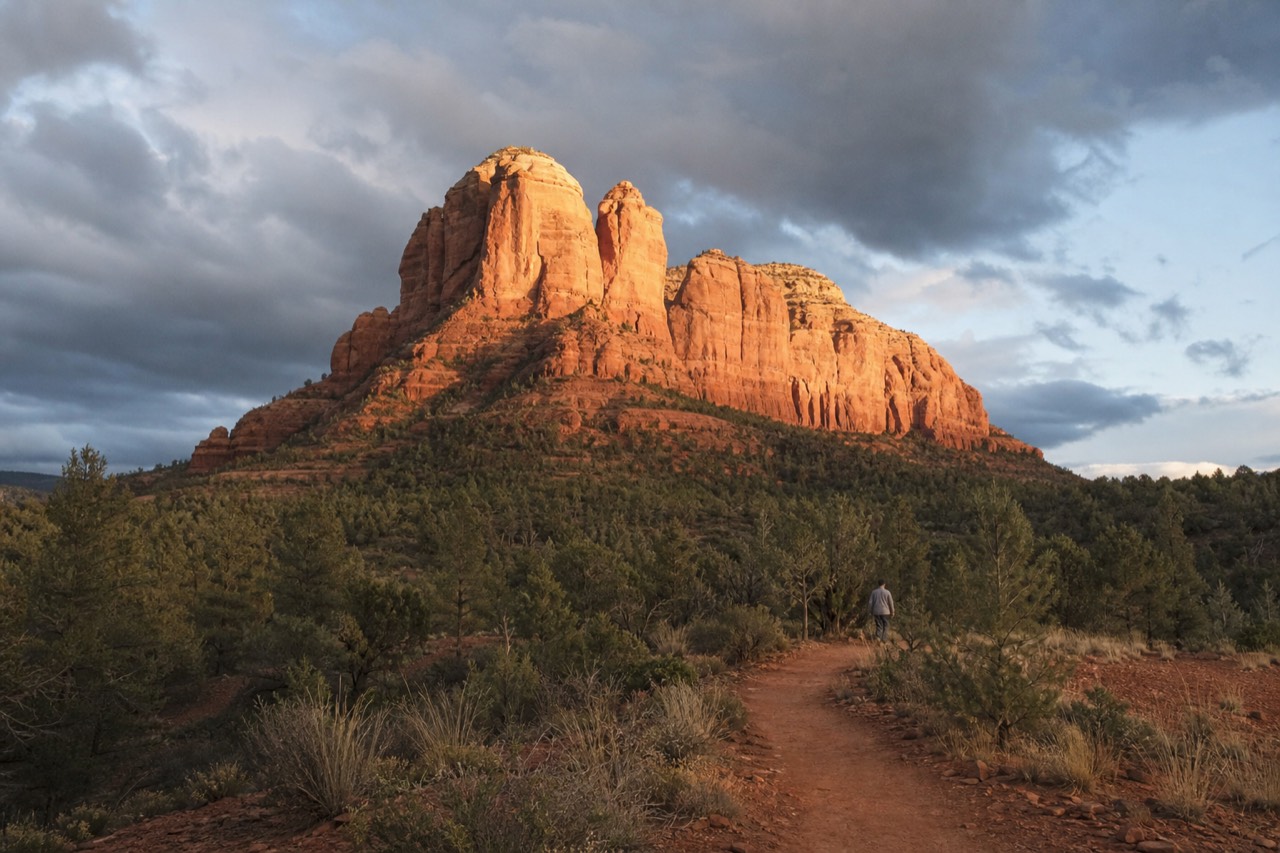
The four classic Sedona vortex sites are Airport Mesa, Cathedral Rock, Bell Rock and Boynton Canyon. Parking at each needs a Red Rock Pass, $5 daily or $20 annual. Go at sunrise, then drop into the Verde Valley by late morning for tastings at Page Springs, Cornville or Cottonwood.
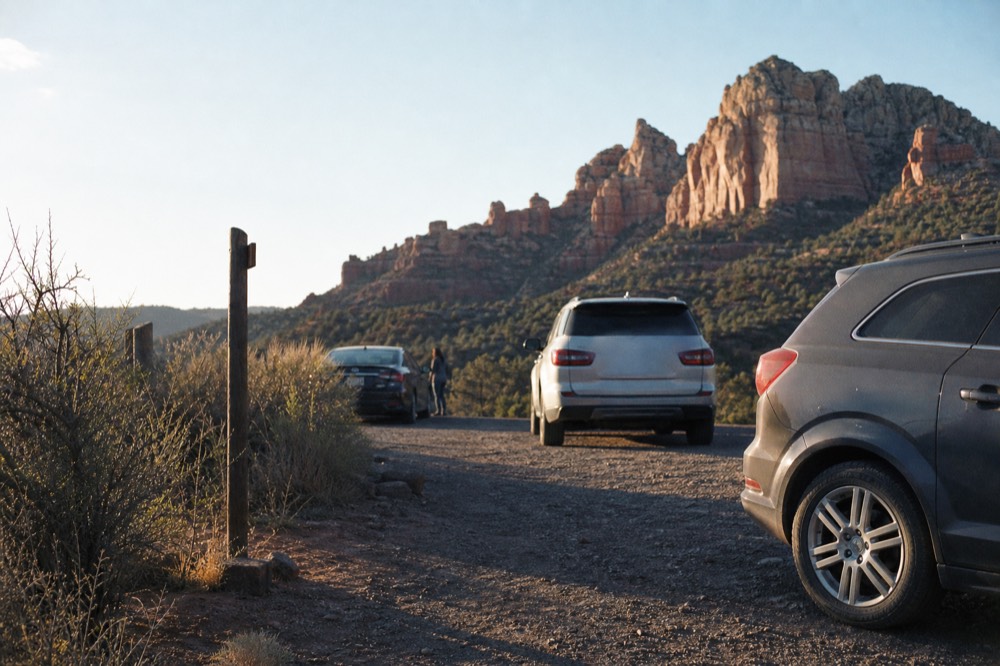
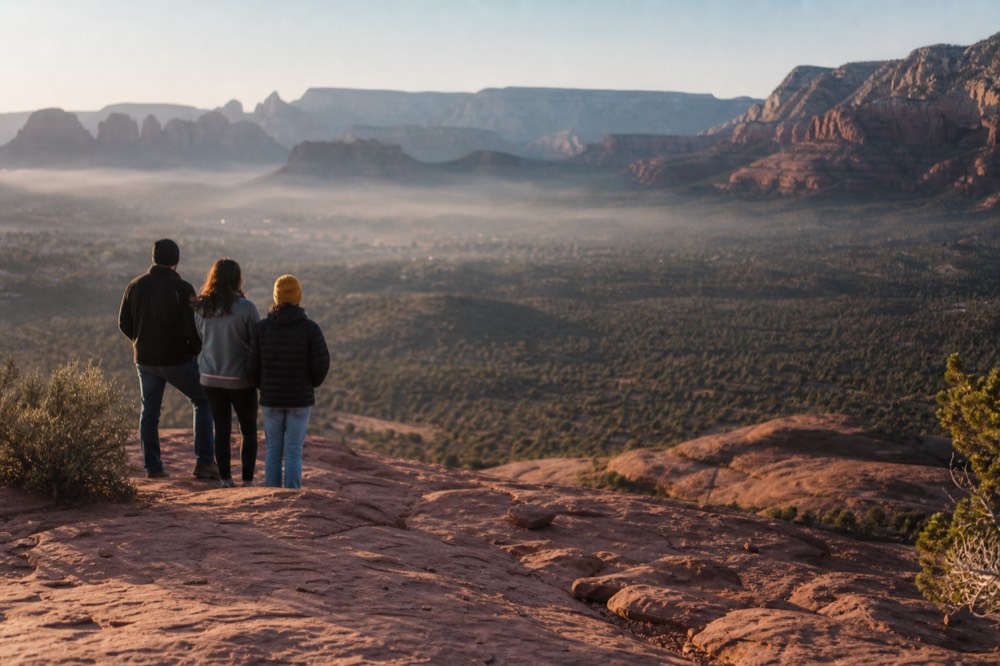
At about ten past six on an October morning, the parking saddle on Airport Mesa is already full and there are cars idling on the shoulder of Airport Road waiting for somebody to leave. Nobody up on the rock is talking much. Two hours later those same people are on the Cornville road with the windows down, heading for a tasting room that opens at eleven. That sequence, rock first and wine second, is the whole trick to this day, and most visitors do it backwards.
Sedona sells the vortex experience harder than it sells anything else, and the Verde Valley sells wine that has quietly grown into an established American Viticultural Area. The two sit twenty-five to forty minutes apart. What follows is how they actually fit together: which sites are worth your morning, what the parking costs, what a guided version of this day includes, and where the self-drive version saves money and where it costs you more than it saves.
What is a Sedona vortex, and what are the four classic sites?
A Sedona vortex is a named red rock location where many visitors report a heightened or calming sensation. The four classic sites are Airport Mesa, Cathedral Rock, Bell Rock and Boynton Canyon. None is a scientifically certified phenomenon. All four are genuinely beautiful viewpoints with short trails, which is reason enough to go.
The word gets used two ways in town and it helps to separate them. One usage is geographic: a specific spot with a name, a trailhead, a parking lot and a Forest Service sign. The other usage is experiential: what a person feels once they are standing there. The first is verifiable and the second is personal. Nobody has produced measurable evidence of an energy field at these coordinates, and the operators worth booking do not pretend otherwise. What they offer is a place, a bit of quiet, and a framework for paying attention.
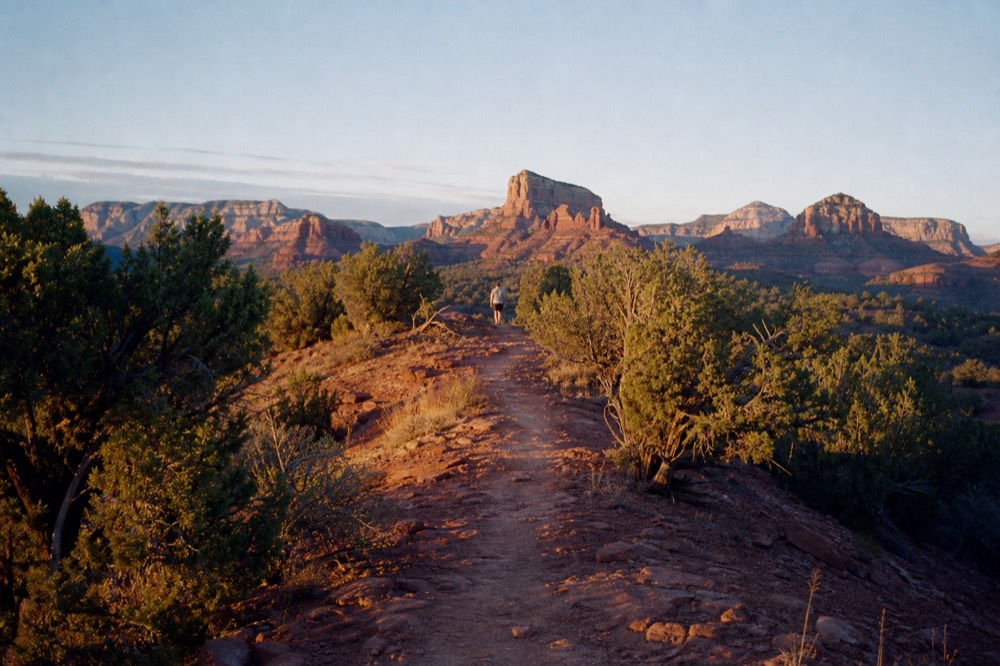
The four sites differ more than the marketing suggests. Airport Mesa is the fastest to reach and the most crowded, a short scramble from a tiny roadside saddle to a knoll with a 360 degree sightline over the whole basin. Cathedral Rock is the hardest, a steep slickrock climb where you will use your hands in at least two places, and the payoff at the saddle is the single best view in Sedona. Bell Rock is the easiest, a wide graded path leaving a paved lot, workable in sandals if you must. Boynton Canyon is the quietest and the longest walk, with the vortex knoll on a short steep spur off the main canyon trail.
Sedona receives more than four million visitors a year, and a large share of them are aiming at exactly these four spots. That number explains the parking situation better than any complaint about it does.
| Vortex site | What it is like | Effort to reach | Parking reality | Pairs well with |
|---|---|---|---|---|
| Airport Mesa | Small knoll, uninterrupted 360 view over the basin | Very short, steep last 60 seconds | Tiny saddle lot on Airport Road, full by sunrise on weekends | An early start before a Cornville tasting |
| Cathedral Rock | Slickrock climb to a wind gap between spires | Short but genuinely steep, hands needed | Back O' Beyond lot is small and fills first | A late-morning start only in cool months |
| Bell Rock | Rounded butte with wide graded approach paths | Easy, near flat for the first stretch | Two large lots off SR 179, the most forgiving of the four | A Village of Oak Creek breakfast, then the valley |
| Boynton Canyon | Red and cream canyon walls, a spur knoll off the main trail | Moderate walk, short steep spur | Trailhead lot fills mid morning, roadside parking restricted | A slower morning and a later tasting start |
| Airport Overlook | Paved viewpoint below the mesa, not the vortex knoll itself | None, walk from the car | Separate fee lot, often the overflow choice | Guests who cannot do the scramble |
What does a Red Rock Pass cost, and where do you actually need one?
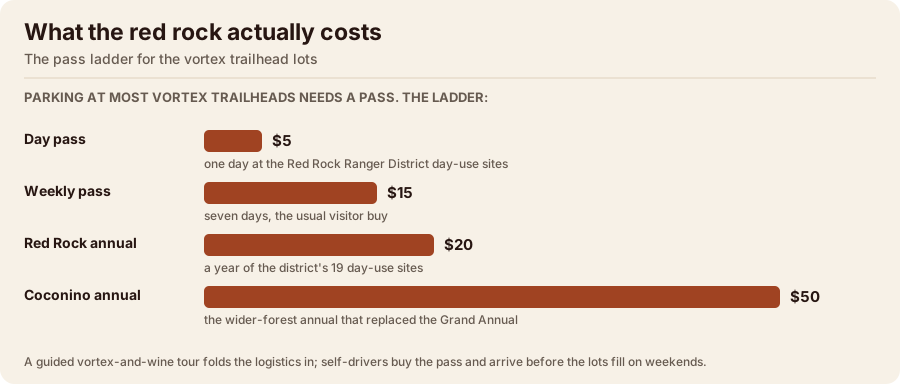
A Red Rock Pass is required to park at 19 day-use sites around Sedona. It costs $5 for a day, $15 for a week, or $20 for the year, and one pass covers up to five people in the vehicle. The old Grand Annual pass has been discontinued and replaced by the Coconino Annual at $50.
The pass is a parking permit, not an entry fee. You are not paying to walk on the land, you are paying to leave a car at a maintained trailhead. That distinction matters because it means the pass has nothing to do with how long you stay or which trail you choose, only with where the vehicle sits. Display it on the dash and go.
The math for a wine-and-vortex visitor is unusually simple. If you are parking at exactly one trailhead on exactly one morning, buy the $5 daily. If you are in town for three or four days and plan more than one red rock morning, the $20 annual pays for itself on day five of use and costs the same as four dailies, which most people hit anyway. Groups get the better end of it: five people in one car pay once. The Coconino National Forest pass program lists the current sites and vendors, and Visit Sedona's pass explainer answers the edge cases about which lots are excluded.
Two things trip visitors up. First, a few high-traffic lots operate outside the pass system entirely and take their own fee, so a Red Rock Pass on the dash is not a universal key. Second, the pass does nothing about availability. There is no reservation, no queue and no guarantee, which is why the practical advice is about clock time rather than money.
| Pass | Price | Covers | Best for |
|---|---|---|---|
| Red Rock Daily | $5 | One vehicle, up to 5 people, one day | A single vortex morning before wine |
| Red Rock Weekly | $15 | One vehicle, up to 5 people, seven days | A three to five day Sedona trip with several hikes |
| Red Rock Annual | $20 | One vehicle, up to 5 people, twelve months | Repeat visitors and anyone parking on four or more days |
| Coconino Annual | $50 | Broader Coconino National Forest day-use sites | Travellers ranging beyond Sedona into the wider forest |
| Guided tour pickup | Included in the fare | Nothing to buy, nothing to display | Anyone who would rather not hunt for a space at all |
Why do people put a vortex morning and a wine afternoon in the same day?
Because the two sit close together and want opposite parts of the day. Red rock sites are best at first light when the lots are open and the heat has not arrived. Verde Valley tasting rooms mostly open around eleven. One activity ends exactly as the other begins, with a twenty-five to forty minute drive between them.
Sedona itself has tasting rooms but almost no vineyards. The fruit grows southwest of town in the Verde Valley AVA, which the federal government established on November 9, 2021 as Arizona's third appellation and the 260th in the country. It runs about 200 square miles and carries roughly 125 planted acres across 24 vineyards, 11 wineries and 25 tasting rooms in Cottonwood, Cornville, Page Springs, Camp Verde, Clarkdale and Jerome. The plantings lean Rhône and Italian: Syrah, Sangiovese, Barbera, Malvasia Bianca, with Cabernet, Chardonnay, Picpoul Blanc and Petite Sirah filling in.
That geography is what makes the pairing work rather than a marketing conceit. From Uptown Sedona you are 25 to 35 minutes from the Page Springs and Cornville cluster, about 30 to Old Town Cottonwood, roughly 35 to Alcantara at the river confluence in Camp Verde, and about 40 to the Clarkdale depot. You lose almost nothing to transit. If you want the full picture of what is pourable down there, the complete winery and tasting room rundown covers every room by cluster.
The failure mode is doing it in reverse. A tasting flight at noon followed by a Cathedral Rock scramble at two in the afternoon is a bad idea in any month with heat in it, and it is illegal to drive yourself between the two if the pours have landed. Rock first. Always.
What happens on the guided vortex and vineyard day?
The Vortex to Vineyards trip starts at The Wilde Resort and Spa with a prickly pear mimosa, moves to a guided vortex experience that includes a personalized reading, then pours at D.A. Ranch and Javelina Leap with a stop at the Airport Overlook. It runs three to four hours, from $199 per person, and holds 4.8 across 206 reviews.
Staying where the tour starts removes the morning logistics entirely, and the meeting point is a resort in its own right:
The Wilde Resort & Spa, 2250 W SR-89A Check rates ›
The structure is the interesting part. Most operators treat the vortex as a photo stop on the way to somewhere else. This one treats it as the anchor and gives it real time on the clock, then uses two working estates rather than in-town rooms for the wine half. D.A. Ranch sits on the Cornville side and pours from its own fruit. Javelina Leap is on the Page Springs road and shows up on more Verde Valley itineraries than any other single winery, which tells you something about how reliably it lands with first-time visitors.
The host is Rachel Reenstra, who worked as a wildlife host for ABC. That is a genuine broadcast credential rather than a tour-marketing flourish, and it changes the texture of the day: this is a hosted experience with a narrator, not a shuttle with a driver. Whether that is worth the fare depends entirely on whether you want somebody talking. Some people very much do not, and there is no shame in booking a plain tasting run instead.
Three to four hours is short by Verde Valley standards, where the shared vineyard runs typically fill six or seven. That compression is deliberate: two wineries and one rock, done properly, instead of four wineries at a jog. It also leaves your afternoon open, which matters if you are only in town for a couple of days. If the format sounds right, you can check the current price and available dates before you fix the rest of your itinerary around it.
How does the self-drive version of the same day compare?
Self-driving costs a $5 parking pass plus tasting fees, typically $15 to $25 per person per winery. It is cheaper on paper. The catch is that whoever drives cannot taste properly, and the last leg back up SR 89A or SR 179 after two flights is exactly the stretch you do not want to attempt.
Run the numbers honestly and the gap narrows fast. Two people self-driving pay one parking pass, two tasting fees at each of two wineries, fuel, and lunch somewhere. Call it a real cost in the region of what one guided seat costs, with one person sober by obligation. Four people self-driving genuinely do save money, provided one of them accepts the designated-driver role for the whole afternoon and means it.
What self-driving buys you is control. You choose the vortex, you choose how long you sit there, you can skip a winery that is packed and go somewhere else, and you can stay at Page Springs until they close. What it costs you is the wine itself for one person, the parking hunt at both ends, and the mental load of the drive home. Guests always underestimate the climb back up 89A in the late afternoon with the light straight in your eyes.
| Element | Self-drive day | Guided vortex and vineyard day |
|---|---|---|
| Parking | $5 daily Red Rock Pass, plus the hunt for a space | Nothing to buy, pickup at the resort |
| Vortex time | Unlimited, your call | Structured, with a guided reading included |
| Wineries reached | As many as you can drive between legally | Two estates, unhurried |
| Tasting fees | Paid per room, usually $15 to $25 each | Itemised on the listing, check what is included |
| Who stays sober | One of you, all day | Nobody has to |
| Total clock time | 6 to 8 hours with the driving | 3 to 4 hours door to door |
| Best for | Groups of four with a willing driver | Couples, solo travellers, anyone who wants the day handled |
Which wineries pair best with a red rock morning?
D.A. Ranch and Javelina Leap sit closest to the vortex sites and open early enough to catch a post-sunrise crowd. Page Springs Cellars carries the deepest list on the same creek road. Oak Creek Vineyards and Alcantara work better as second or third stops once you are already down in the valley.
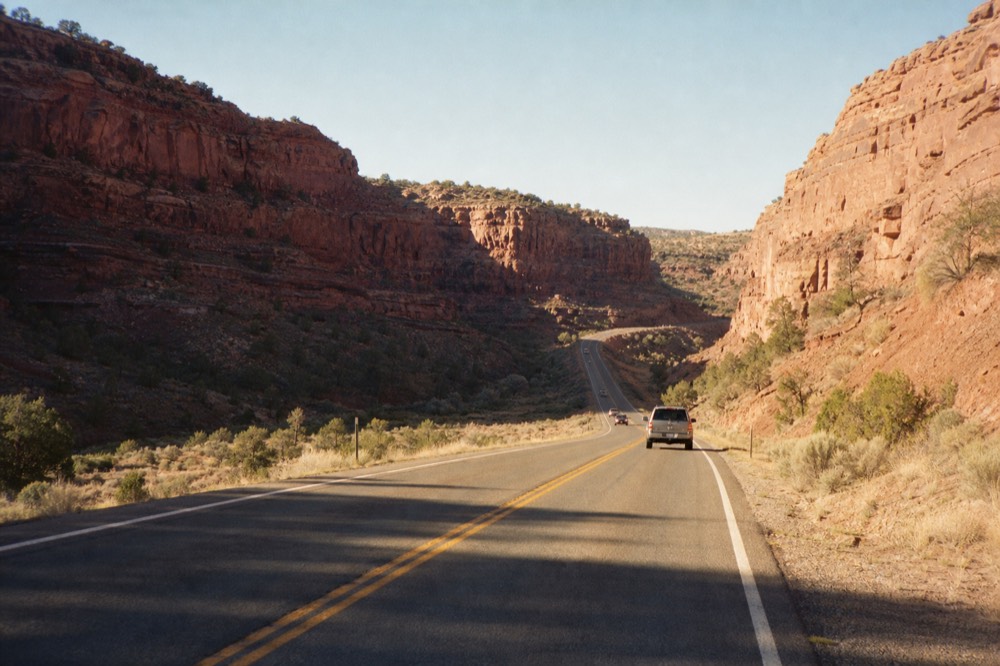
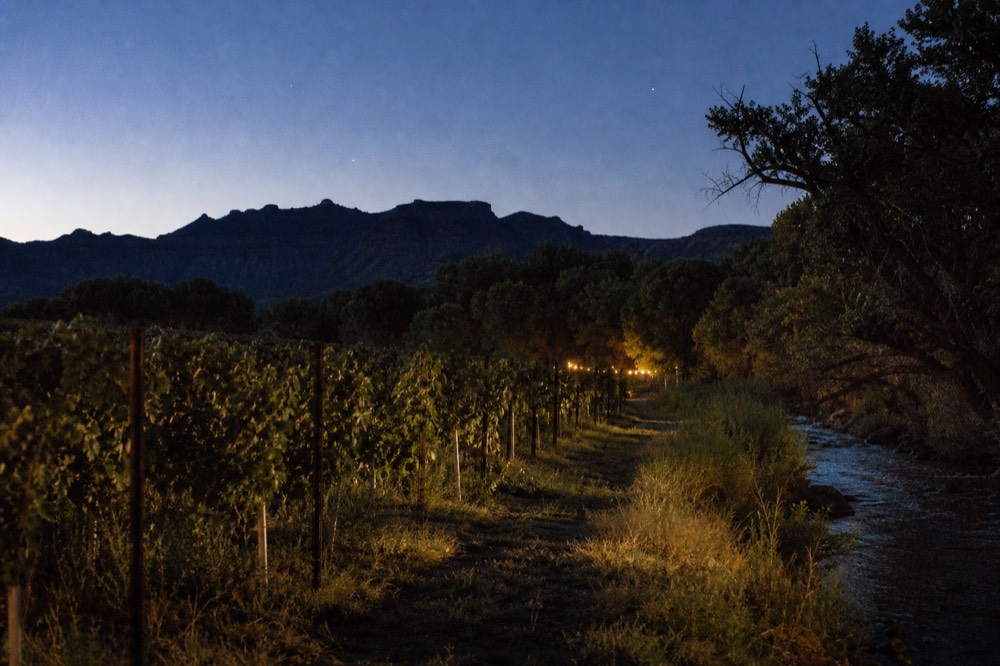
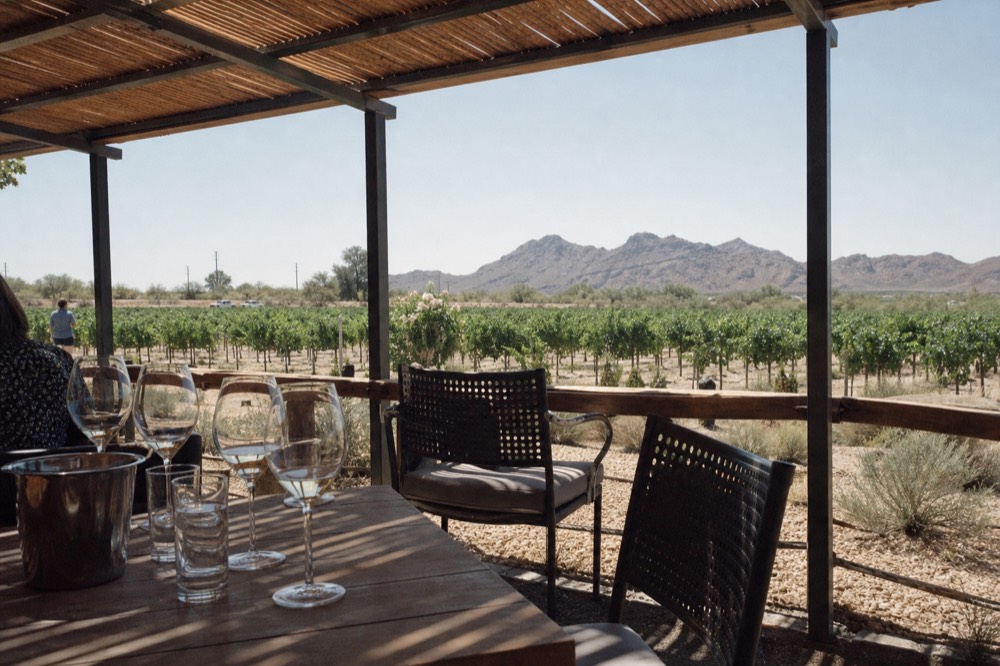
The Page Springs and Cornville corridor is the natural landing zone after a Sedona morning because it is the closest working cluster and because the road itself is part of the experience: a narrow creek-side lane under cottonwoods, which is a genuine shock after an hour on bare red slickrock. The light on the vines there in late October is the single best hour of the year in the valley, and it is the reason I schedule autumn groups later rather than earlier.
Alcantara deserves a note of its own because it is the outlier. The estate runs 87 acres at the Oak Creek and Verde River confluence with more than 20,000 vines across 17 varietals, its tasting room and restaurant open daily from 11:00 to 5:00 with no reservation needed, and it closes only for Thanksgiving and Christmas. It is also the endpoint of the kayak trips, which is a different day entirely and covered in the Verde River paddle-to-tasting plan.
If a vortex morning is not the pairing you want, the region supports several others. A jeep-and-tasting combo exists for people who would rather bounce over the rocks than walk them, and the listing carries current pricing for that format. The full lineup of shared runs is laid out on the vineyard tour comparison.
| Winery | Where it sits | Drive from Uptown Sedona | Why it works after a vortex morning |
|---|---|---|---|
| D.A. Ranch | Cornville | 25 to 35 min | Estate fruit, ranch setting, unhurried pace |
| Javelina Leap | Page Springs road | 25 to 35 min | Appears on more itineraries than any other room in the valley |
| Page Springs Cellars | Page Springs creek road | 25 to 35 min | Deepest list on the corridor, shaded creek-side terrace |
| Oak Creek Vineyards | Page Springs area | 25 to 35 min | Straightforward, easy second stop |
| Alcantara Vineyards | Camp Verde, river confluence | ~35 min | 87 acres, 17 varietals, open daily 11 to 5 |
| Cove Mesa Vineyard | Verde Valley floor | 30 to 40 min | Frequently paired on shared runs, quieter room |
What should you expect from a personalized reading?
Expect a guided conversation at a scenic site, often involving intention setting, breathing, and sometimes an intuitive reading of what the guide perceives. It is a practice, not a diagnosis. Take it in the spirit it is offered, and if it is not your thing, say so at booking and enjoy the view instead.
This is the part of the day where honest writing matters more than enthusiasm. There is no measurement behind a vortex reading, no standard, no certification body, and no operator can promise you an experience. What there is: a person who does this every week, a location that is quiet at seven in the morning, and forty-five minutes where nobody checks a phone. Plenty of guests report that the combination did something useful for them. Plenty of others report a nice walk and a good photo. Both outcomes are fine and neither is a failure of the tour.
The mocking version of this article would be easy to write and would be wrong. People arrive in Sedona at real turning points, after a loss or a diagnosis or a decision they cannot make, and a structured hour at a beautiful place is not a scam because it lacks instrumentation. What would be a scam is a promise of results, so listen for that in any pitch. Good guides describe what they do. Bad ones describe what will happen to you.
Practical note for skeptics travelling with believers, which is a very common pairing on this day: the wine half needs no belief system at all, and the sites are worth standing on regardless. Book the trip for the person who wants it, go for the view yourself, and nobody has a bad morning. For a wider look at that side of town, the spiritual things to do in Sedona rundown is the honest version.
When should you go, and how bad is the parking?
Arrive at a vortex trailhead before sunrise, particularly Friday through Sunday. Popular sites run heavily crowded and the lots frequently fill outright, with weekends the worst. Wineries open around eleven, so a 6:00 to 8:30 rock window drops you into the valley exactly on time.
Weekend crowding at the four classic sites is not an occasional annoyance, it is the baseline condition, and full lots are routine. Airport Mesa is the most affected because the saddle holds so few cars and because it is the site every first-timer has heard of. Bell Rock is the most forgiving thanks to two large lots on SR 179. Boynton buys you quiet at the cost of a longer walk.
Season changes the calculus more than day of week does. Summer mornings are the only tolerable hours for a scramble, so the pre-dawn lots fill even harder. Winter mornings can be genuinely cold on an exposed knoll and the slickrock holds ice in shaded gaps, which is the one weather condition that turns Cathedral Rock from steep into dangerous. Spring and autumn are the reason people move here, and autumn has the additional advantage of coinciding with harvest in the valley. For the full month-by-month view, see the seasonal timing guide.
A guided pickup removes the parking question entirely, which is worth more in practice than it sounds on paper. On a Saturday in October the difference between a 5:45 alarm and a 7:30 pickup is roughly forty minutes of circling.
What do you actually need to bring?
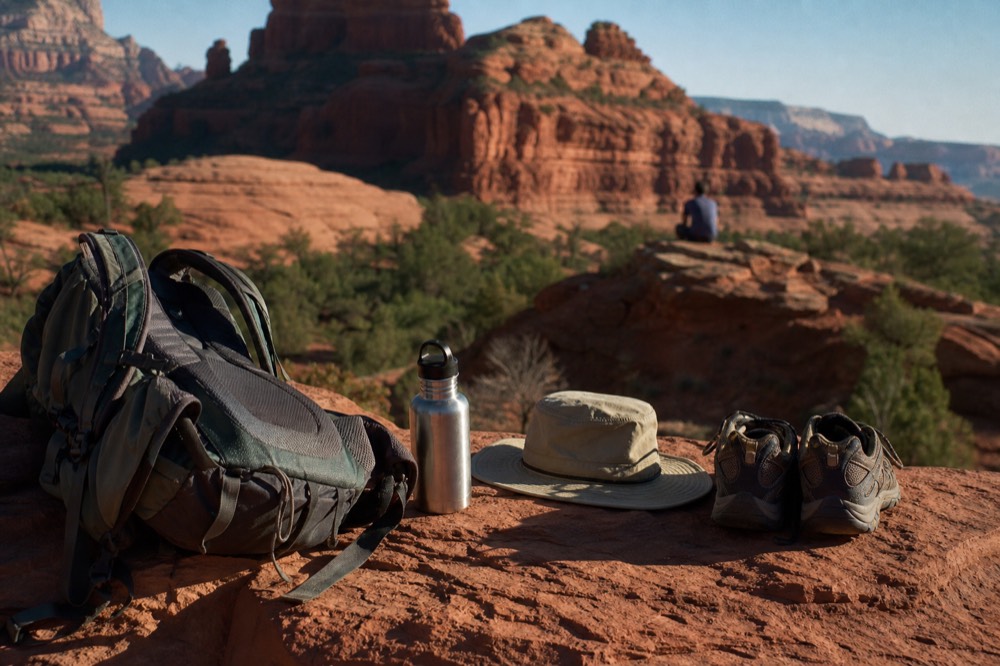
Bring layers, real shoes, more water than feels necessary, and a photo ID for the tasting half. Every pour in Arizona is 21 and over with ID checked at the room. Whether under-21 passengers may ride along is each operator's own policy and is stated on its listing, so read it rather than assuming.
Footwear is the one thing people get wrong most often. The red rock is slickrock, which means smooth sandstone that behaves like polished stone when it is dusty and like ice when it is wet. Trail runners or hiking shoes with actual tread turn Cathedral Rock from a scramble into a walk. Sandals are fine at Bell Rock and nowhere else on this list.
Water is the second. The valley floor runs warmer than Sedona itself and the difference is obvious the moment you step out of the car in Cottonwood in July. A morning on exposed rock followed by an afternoon of tasting is a genuine dehydration setup, and the wine will hit noticeably harder than it would at home. Drink a full bottle before the first pour, not after it.
The rest is small. Sun hat, sunscreen reapplied after the hike, a light jacket even in summer for the pre-dawn hour, cash or card for tasting fees where they are not included, and a bag with room for bottles if you plan to buy. Most rooms will ship, though shipping law varies by destination state and the staff will tell you what they can do.
| Item | Vortex half | Wine half | Notes |
|---|---|---|---|
| Photo ID | Not needed | Required, every pour | 21 and over, no exceptions, checked at the room |
| Shoes with tread | Essential on Cathedral Rock | Irrelevant | Slickrock is slippery when dusty or wet |
| Water | 1 litre minimum per person | Keep drinking between flights | Valley floor runs hotter than town |
| Layers | Cold before sunrise, warm by nine | Shaded terraces stay cool | Temperature swings hard in shoulder season |
| Red Rock Pass | Required at the trailhead lot | Not applicable | Included in the fare on guided days |
| Cash or card for fees | No | Yes, unless included | The listing itemises what is covered |
| Bottle space in the bag | No | Yes, if you plan to buy | Many rooms ship, rules vary by state |
Is the guided day worth it, or should you drive yourself?
Book the guided day if you are a couple, a solo traveller, or a group where everyone wants to drink. Drive yourself if you are four people with a willing designated driver, you want more than two wineries, or you want to sit at Page Springs until closing. The deciding factor is almost never money.
Here is the uncomfortable comparison, since this site would rather say it than sell around it. At $199 per person for three to four hours, the vortex and vineyard format is not the cheapest way to see two wineries. The shared vineyard runs start at $109 and cover four. The three-hour express starts at $79. If your goal is maximum wine per dollar, this is the wrong product and you should look at the full shared lineup instead.
What you are paying for is a hosted, structured morning at a red rock site with a personalized reading built in, plus somebody else doing the driving and the parking. That is a real product with a real 4.8 rating across 206 reviews, and if that is what you want, it is priced normally for a hosted small-group experience in a national-park-adjacent town. If it is not what you want, no amount of scenery justifies the gap.
For groups who want the vortex morning without the hosted framing, a private vehicle is the other route: the door-to-door private options run custom stops and you can simply ask the driver for an early rock stop before the wineries open. Those sit on the private wine tour page, and you can see how a custom three to four stop day is priced if you would rather build the sequence yourself. One more honest flag: the highest-rated adventure product in this region is not a wine bus at all, it is a paddle that ends at a tasting room, and you can compare that day against this one before deciding which version of Verde Valley wine country you actually want.
What does a realistic hour-by-hour plan look like?
A working version: 6:00 at the trailhead, 8:00 back at the car, 8:30 breakfast in the Village of Oak Creek or Cottonwood, 11:00 first tasting, 1:00 lunch, 2:30 second tasting, back in Sedona by four. That leaves the late afternoon free, which matters on a short trip.
The reason to write the plan down is that both halves have hard edges. The vortex half is bounded by heat and parking at the front. The wine half is bounded by opening hours at the front and by pour cut-offs at the back, since most rooms stop serving before they close. Between those two constraints there is a genuine window, and it is wider than most visitors realise as long as they start early.
Where plans break is the middle. People finish the hike energised, decide to add a second vortex site, and arrive at the first winery at one o'clock instead of eleven with two rooms to fit into an afternoon. Two red rock sites and two wineries in one day is possible, but only from a 5:30 start and only in cool months.
The one hour I would protect is lunch. Tasting on an empty stomach after a sunrise hike is how a pleasant afternoon turns into a bad one, and several of the shared runs build a proper sit-down meal or a picnic into the schedule precisely because operators learned this the hard way. If you are self-driving, book the table.
| Time | Self-drive plan | Guided plan |
|---|---|---|
| 05:45 | Leave lodging, drive to trailhead | Still asleep |
| 06:00 to 08:00 | Vortex site, sunrise, walk back | Still asleep |
| 08:00 to 08:30 | Drive down to the valley | Pickup at the resort, welcome pour |
| 08:30 to 10:30 | Breakfast, refuel, wait for opening | Guided vortex experience and reading |
| 11:00 | First tasting room | First estate |
| 12:30 to 13:30 | Lunch, booked in advance | Second estate |
| 14:00 to 15:00 | Second tasting room | Airport Overlook stop, then back |
| 16:00 | Back in Sedona, driver still sober | Dropped at the resort, afternoon free |
How does this day fit into a wider Sedona itinerary?
Treat it as your day one. It covers the two things people come for, it finishes early, and it tells you quickly whether you want more red rock or more wine for the rest of the trip. Most visitors discover they want more wine, which is why the multi-winery runs sell so well.
A short Sedona trip is usually two or three nights, and the standard mistake is to spend all of it hiking. The red rock is spectacular and it is also relentlessly the same activity: park, walk, look, return. By the second afternoon most people are ready for shade and a chair. That is precisely what the valley offers, thirty minutes downhill, and the Old Town Cottonwood tasting strip is the walkable version where you park once and stay put.
If you have a third day, the region's stranger offerings are worth it. There is a first-class railroad car that runs a wine-paired route through a canyon you cannot reach by road, and there is a paddle trip that ends at a vineyard beach. Neither resembles a standard tasting run. Both are covered elsewhere on this site, and both sell out earlier than the bus tours do.
Between all of it, twelve bookable tours serve this region carrying 2,424 traveller reviews between them, with starting prices from $79 per person up to $472 for a private group vehicle. Almost all of them cancel free, usually up to 24 hours out. The single exception is one private elite option that is non-refundable, which is stated plainly on its listing and worth reading before you book anything at that price.
Frequently asked questions
Do I need a Red Rock Pass if I am on a guided tour?
No. The pass covers parking a vehicle at a day-use site, so if you are picked up and dropped off, there is nothing for you to buy or display. It becomes relevant only if you drive yourself to a trailhead, in which case it is $5 for the day, $15 for a week or $20 for the year, valid for up to five people in one car.
Which vortex site is best if I only have time for one?
Airport Mesa for the view and the speed, Bell Rock if anyone in the group has mobility limits, Cathedral Rock if you are fit and want the best sightline in Sedona, Boynton Canyon if quiet matters more than convenience. On a wine day, Airport Mesa wins on the clock because you are off the rock and moving by eight.
Can I taste wine and then drive back to Sedona?
Legally you can only if you are under the limit, and practically the return climb on SR 89A or SR 179 is the wrong road on which to test that. Every shared and private run exists because this exact problem exists. If you self-drive, nominate a driver who will not taste at all, not one who will "just have a sip".
Is the vortex reading included, or is it extra?
On the hosted vortex-and-vineyard trip, the guided vortex experience with a personalized reading is part of the itinerary rather than an add-on. Tasting fees and inclusions vary by operator across the region, and the listing itemises exactly what the fare covers, so read that panel before comparing headline prices.
How many wineries can I realistically fit after a sunrise hike?
Two, comfortably. Three if you start the wine half at eleven, keep lunch short and accept a rushed final room. The shared runs that cover four wineries do so across six or seven hours with no hiking attached, which is the honest reason those days start earlier and run longer than a vortex morning allows.
Are children allowed on the wine half?
Tasting is 21 and over with ID, without exception. Whether an under-21 passenger may ride along is set by each operator individually and stated on its listing, so never assume the policy carries across from one tour to another. For families, a red rock morning plus an afternoon at a vineyard with food service tends to work better than a multi-room tasting run.
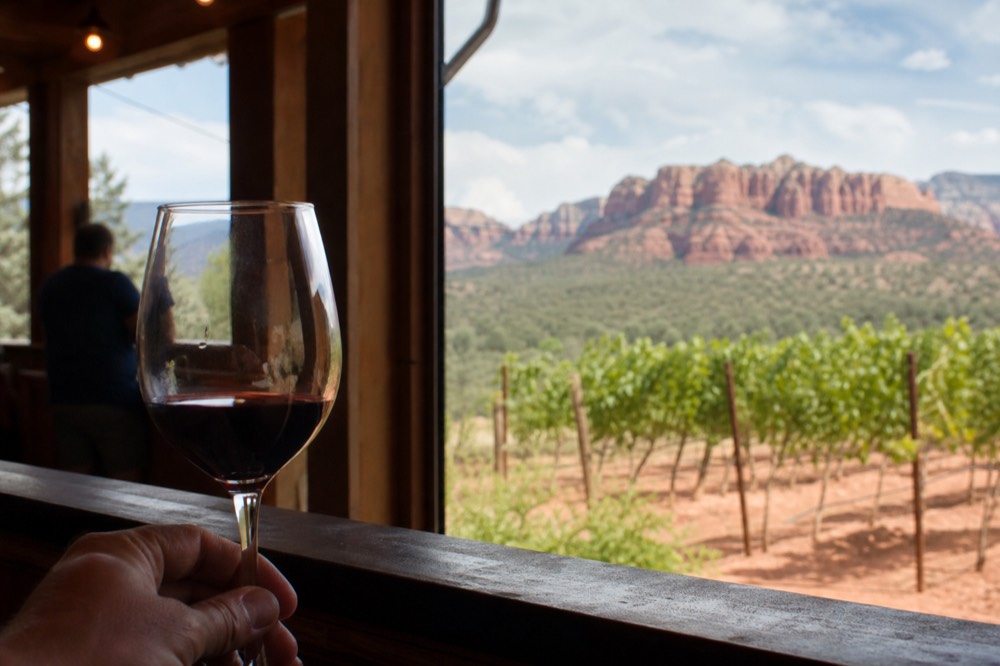
The last thing worth saying is about expectations. A vortex morning will not fix anything, and the wine will not be Napa. What the day does deliver, reliably, is a sunrise on the best rock in Arizona followed by lunch in a green creek valley that nobody outside the state seems to know exists. That contrast, in about eight hours, is the actual product. Every one of the shared vineyard runs and the private options is a variation on getting you to the second half of it without a car key in your pocket.