Wineries in Sedona: The Honest 2026 Map of Every Tasting Room and Vineyard
Search for wineries in Sedona and you get a list that quietly mixes two different things: three tasting rooms inside town, and a whole federally recognised growing region half an hour southwest. This sorts them out.
 By Patricia Collins, Sedona wine tour specialist & Verde Valley experience guide
Short answer
Sedona itself has tasting rooms, not vineyards. Three in-town rooms pour Arizona wine on the spot. The actual growing happens in the Verde Valley AVA, 20 to 40 minutes southwest, where 24 vineyards and 11 wineries feed roughly 25 tasting rooms across Cottonwood, Cornville, Page Springs, Camp Verde, Clarkdale and Jerome.
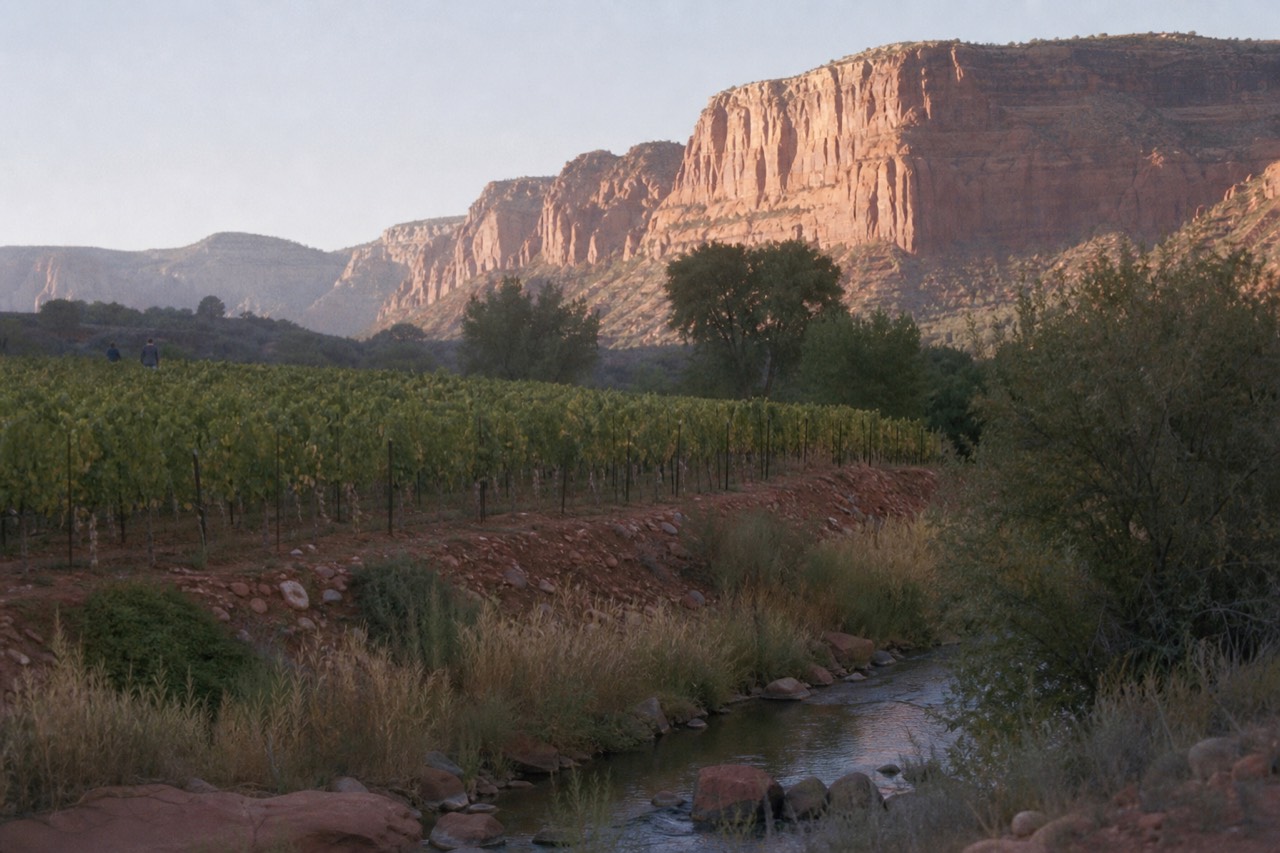
The first thing that surprises people who drive up from Phoenix expecting vineyards is how few vines they see once they reach Sedona. You get red rock, junipers, a creek, and a town built on switchbacks. What you do not get, at least not inside city limits, is a working vineyard of any size. I have had guests stand in Uptown with a wine map in hand asking which trail leads to the vines. None of them do. The vines are southwest, down the hill, in a valley that looks and behaves nothing like the one they just left.
That gap between what "wineries in Sedona" sounds like and what it means on the ground is the single most useful thing to understand before you plan a tasting day. Everything below is organised around it.
Are there any actual wineries inside Sedona city limits?
No commercial vineyard of any consequence grows inside Sedona. What the town has is three established tasting rooms and wine bars that pour Arizona wine, including bottles from the valley below, plus a bottle shop culture strong enough that many visitors never leave town to taste. The grapes themselves come from elsewhere.
Sedona sits around 4,300 feet in a canyon system that is beautiful and, for viticulture, mostly wrong. There is little flat ground, the soil is thin over sandstone, and land that could hold vines is either federal forest or extremely expensive residential. So the town does what mountain resort towns tend to do: it imports the wine and builds excellent rooms to drink it in.
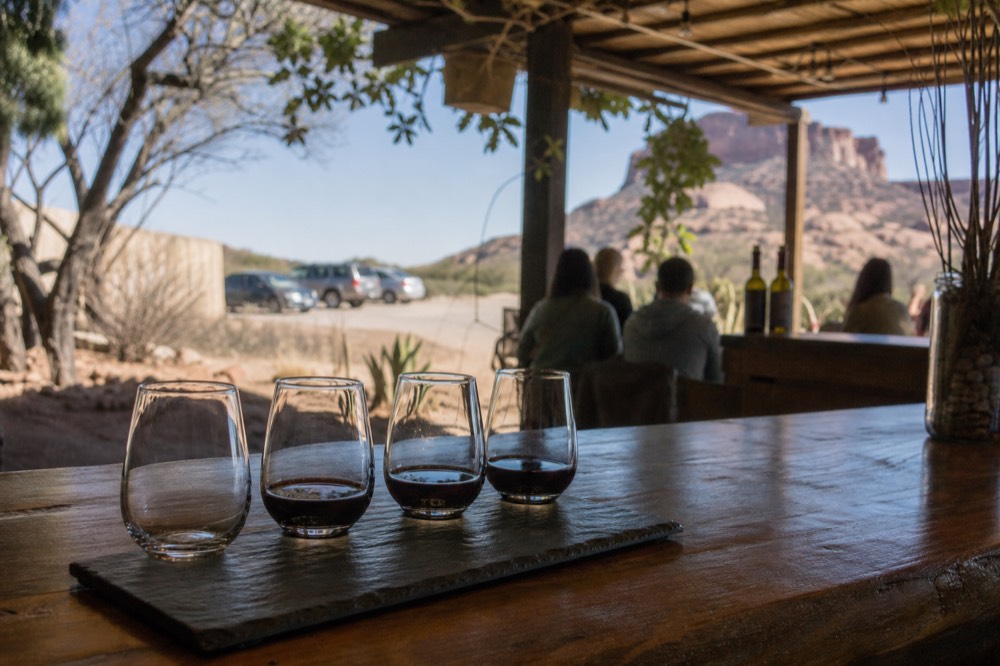
The Art of Wine in Uptown is the one most people find first, partly because it sits on the main walking strip. It pours more than 40 wines by the glass and runs a bottle shop carrying over 600 labels, with flights starting around $15 and a daily happy hour from 3 to 5 pm. Walk-ins are the norm rather than the exception, which matters on a Saturday when every tasting room down in the valley wants a reservation.
Vino di Sedona plays a different game. Its list runs past 900 wines with a deep Arizona section, more than 50 available by the glass, and Arizona-specific flights poured every day. It is also a live music room, so the evening version of the place is closer to a bar than a tasting counter. Winery 101 rounds out the trio, and Vino-Zona has been operating in town as well through 2026.
| In-town Sedona room | Where | What it pours | Best for |
|---|---|---|---|
| The Art of Wine | Uptown, on the walking strip | 40+ by the glass, 600+ bottle shop, flights from $15 | A first taste of Arizona wine without driving |
| Vino di Sedona | Central Sedona | 900+ label list, 50+ by the glass, daily Arizona flights | Comparing Arizona bottles side by side, evening music |
| Winery 101 | Central Sedona | Arizona-focused pours and bottles | A short, low-commitment stop between other plans |
| Vino-Zona | Sedona | Arizona pours | An extra room when the others are full |
The practical value of the in-town rooms is timing rather than novelty. Almost everyone arrives in Sedona in the late afternoon after a two-hour drive from Phoenix or Scottsdale, by which point the valley tasting rooms are closing or about to. That first evening is when the town rooms earn their place: you can taste six Arizona wines, work out whether you prefer the Rhône reds or the aromatic whites, and walk back to your hotel. Then you plan the next day around what you actually liked rather than around a list you found online.
None of these are wineries in the production sense, and it is worth being straight about that rather than letting a search result blur it. If your goal is to see fruit on a vine, a barrel room, a crush pad, you will not find it at any of them. If your goal is to drink good Arizona wine while staying inside a walkable evening, they are the correct answer and you can skip the drive entirely. I go into each of them properly in the guide to Sedona's in-town tasting rooms.
Where does Sedona's wine actually grow?
In the Verde Valley American Viticultural Area, a federally recognised growing region established by the Alcohol and Tobacco Tax and Trade Bureau on November 9, 2021. It was the 260th AVA in the United States and Arizona's third. It covers roughly 200 square miles and holds about 125 planted acres, 24 vineyards and 11 wineries.
The valley sits below Sedona to the southwest, dropping about a thousand feet in elevation over a 20 to 40 minute drive. That drop changes everything: more open ground, deeper alluvial soils along the Verde River and Oak Creek, and a growing season of roughly 175 to 200 days. High-desert conditions bring wide day-to-night temperature swings, which is exactly what red grapes need to hold acid while ripening sugar.
Planting choices reflect that. The valley leans Rhône and Italian rather than trying to imitate Napa. Syrah, Sangiovese, Barbera and Malvasia Bianca do the heavy lifting, alongside Cabernet, Chardonnay, Picpoul Blanc, Petite Sirah and Seyval Blanc. A few growers push into varieties nobody expected to work here and some of them do.
The tasting rooms are spread across six communities: Cottonwood, Cornville, Page Springs, Camp Verde, Clarkdale and Jerome. Roughly 25 rooms across the valley, and the official Verde Valley Wine Trail strings nearly 30 stops together into a signed route. The Verde Valley Wine Festival, the region's flagship event, took a 2025 Arizona Travel Award.
| Verde Valley AVA | Detail |
|---|---|
| Established | November 9, 2021, by the TTB |
| Rank | Arizona's third AVA, 260th in the US |
| Area | About 200 square miles |
| Planted acres | About 125 |
| Vineyards | 24 |
| Wineries | 11 |
| Tasting rooms | About 25 |
| Communities | Cottonwood, Cornville, Page Springs, Camp Verde, Clarkdale, Jerome |
| Growing season | 175 to 200 days |
| Signature grapes | Syrah, Sangiovese, Barbera, Malvasia Bianca |
One hundred and twenty-five planted acres is small. For scale, that is a rounding error against California's big appellations. It is also the point: nearly every winery here is small enough that the person pouring your Syrah has probably pruned the vines it came from, and the wine you like may only exist in a few hundred cases.
How far are the wineries from Sedona, and which direction?
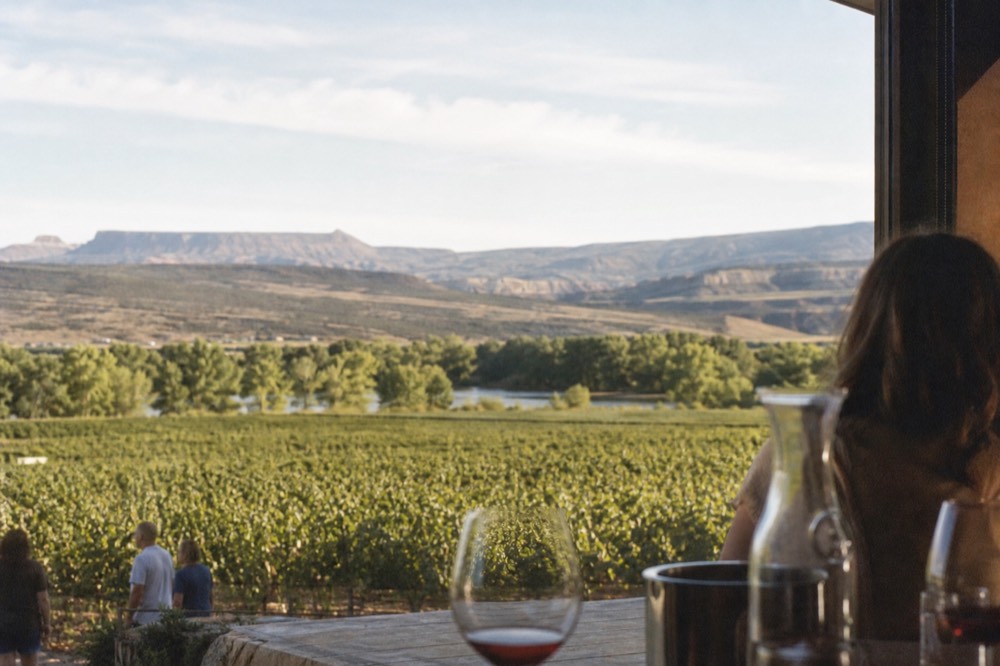
Everything runs southwest. From Uptown Sedona, the Page Springs and Cornville cluster is 25 to 35 minutes, Old Town Cottonwood is about 30, Alcantara at Camp Verde is about 35, the Clarkdale rail depot is about 40, and Jerome is about 45 minutes uphill on switchbacks. Nothing worth tasting sits north or east of town.
Those numbers are approximate and they assume normal traffic, which Sedona does not always have. The State Route 89A corridor through town backs up badly on holiday weekends and during the late afternoon return, and the roundabouts on 179 can add fifteen minutes to any estimate. Guests always underestimate the drive back up 89A after a long tasting day, especially in winter when the light goes early and the last stretch into town is dark and curved.
The shape of the day matters more than the raw drive times. Page Springs and Cornville sit close enough together that you can do three wineries there in an afternoon with only a few minutes between each. Cottonwood is a walking strip, so once you park you stay parked. Jerome is the outlier: it is a mile of vertical climb on a road with a hundred and fifty-odd curves, and it is genuinely tiring to drive after tasting.
| From Uptown Sedona to | Approx. drive | What is there |
|---|---|---|
| Page Springs / Cornville cluster | 25 to 35 min | Page Springs Cellars, Javelina Leap, Oak Creek Vineyards, D.A. Ranch |
| Old Town Cottonwood | ~30 min | Main Street tasting strip, Arizona Stronghold, Merkin trattoria |
| Alcantara Vineyards, Camp Verde | ~35 min | River-confluence estate, kayak takeout, tasting patio |
| Clarkdale depot | ~40 min | Verde Canyon Railroad boarding |
| Jerome | ~45 min uphill | Caduceus Cellars, Original Jerome Winery, Cabal Cellars |
| Phoenix or Scottsdale to Sedona | ~2 hours | The main feeder drive |
If you are coming up from the metro area rather than staying in town, the arithmetic changes enough that I treat it separately in the guide to wine trips from Phoenix and Scottsdale.
Which wineries sit in the Page Springs and Cornville cluster?
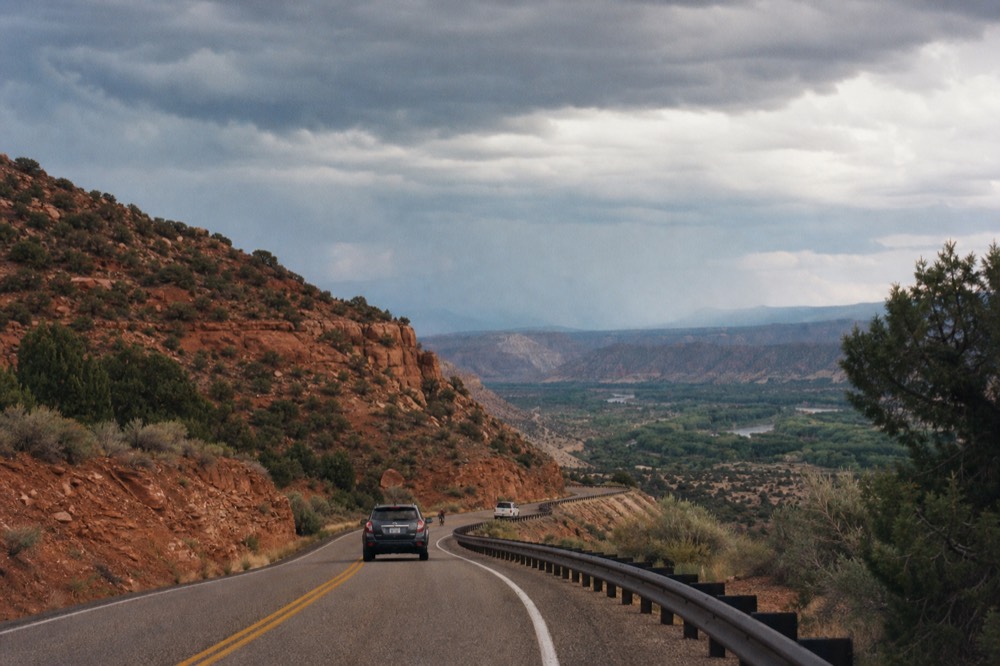
Four names carry this cluster: Page Springs Cellars, Javelina Leap Vineyard Winery & Bistro, Oak Creek Vineyards & Winery, and D.A. Ranch. They sit along the creek road southwest of Sedona, close enough together that a car can link three of them in an afternoon, and they are the stops that nearly every shared tour from Sedona is built around.
Page Springs Cellars is the anchor and the most structured operation of the group. It runs a proper tour program rather than just a counter: a summer cellar tour with four tastings at $39, or $22 without tastings and free for ages 12 to 17, an estate winery tour with five tastings at $45 or $25 without, and during harvest an estate tour with five tastings at $57 or $37 without. Harvest tours started mid-August in 2026. The tasting room and bistro run Sunday through Wednesday 11 am to 6 pm and Thursday through Saturday 11 am to 8 pm, with events like Sip & Crave scattered through the calendar. Booking direct through Page Springs Cellars is the way to lock a tour slot.
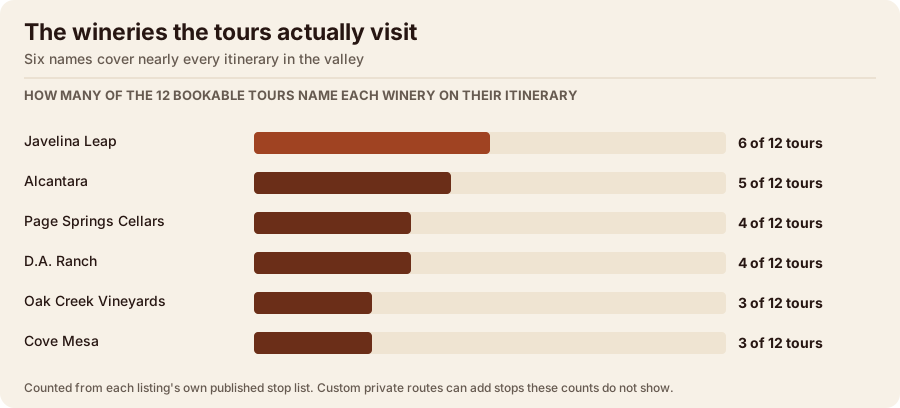
Javelina Leap sits practically next door and is the friendliest of the group, a small room with a bistro attached and a reputation for pouring generous reds. It appears on more Sedona tour itineraries than any other winery in the valley, which tells you something about how well it handles groups.
Oak Creek Vineyards & Winery has actual vines you can walk past on the way in, which is rarer here than you would think. D.A. Ranch is the quiet one, a working ranch property that runs vineyard walking tours Wednesday through Saturday year-round in 2026 at 11 am, noon or 1 pm, priced at $55 per person including a four-wine tasting and a logo glass. If you only have time for one guided vineyard walk, that is the one I point people toward, because the walk is genuinely through the vineyard rather than around a building.
| Cluster winery | Own experience offered | Price | Notes |
|---|---|---|---|
| Page Springs Cellars | Summer cellar tour, 4 tastings | $39 | $22 without tastings, free ages 12 to 17 |
| Page Springs Cellars | Estate winery tour, 5 tastings | $45 | $25 without tastings |
| Page Springs Cellars | Harvest estate tour, 5 tastings | $57 | $37 without tastings, from mid-August |
| D.A. Ranch | Vineyard walking tour, Wed to Sat | $55 | Includes 4-wine tasting and logo glass |
| Javelina Leap | Tasting room and bistro | Varies | The most tour-visited room in the valley |
| Oak Creek Vineyards | Tasting room with vines on site | Varies | Small, informal, walkable grounds |
Because those own-winery experiences run on fixed schedules, the tension for a lot of visitors is between booking one of them directly and taking a shared tour that handles the driving but sets its own pace. If you want the tasting fees themselves folded in rather than paid at each counter, the all-inclusive shared run covers every fee plus a made-to-order lunch across Page Springs Cellars and Javelina Leap, and you can see what that day currently costs before deciding. The full breakdown of this stretch of road sits in the Page Springs and Cornville cluster guide.
What is on the Old Town Cottonwood tasting strip?
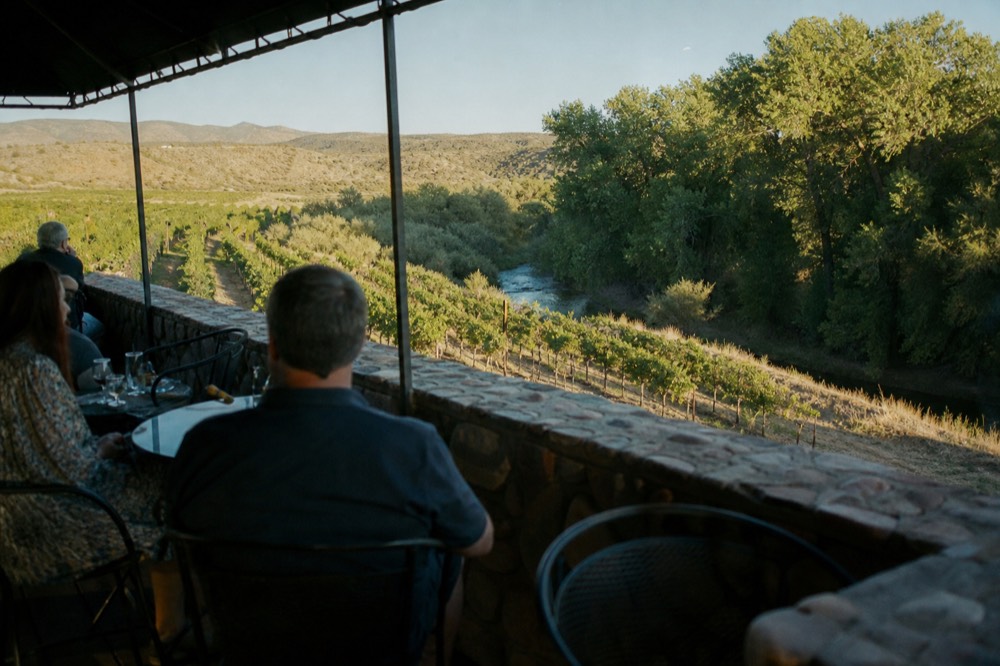
Old Town Cottonwood is the densest tasting concentration in the region. Six wine and spirit tasting rooms sit on Main Street itself, steps apart, and counting the wider Old Town footprint pushes the storefront total past fifteen. Arizona Stronghold at 1023 N Main, Cellar 433 and Odyssey Cellars at 909 N Main, and Rubrix Wines at 1040 N Main anchor the walk.
This is the part of the region that behaves like a wine town rather than a wine country. You park once, and then you walk a historic main street between rooms without touching your keys again. That single fact makes Cottonwood the most sensible destination for anyone worried about driving between tastings, and it is the reason a lot of Verde Valley regulars skip the vineyard circuit entirely and just come here.
Merkin Vineyards Trattoria sits right off Main Street at 770 N Verde Heights Drive, with hours that run to 8 pm on Sundays, and it is one of the few places in the valley where the food is a genuine reason to go rather than a way to soak up the pours. Merkin's Hilltop facility runs barrel room experiences from around $30 per person including an estate tasting.
| Old Town Cottonwood room | Address | Character |
|---|---|---|
| Arizona Stronghold Vineyards | 1023 N Main St | Established Arizona label, central Main Street position |
| Cellar 433 / Odyssey Cellars | 909 N Main St | Two labels sharing a Main Street storefront |
| Rubrix Wines | 1040 N Main St | Small-production focus, north end of the strip |
| Merkin Vineyards Trattoria | 770 N Verde Heights Dr | Food-led, open to 8 pm Sunday, just off Main |
| Additional Main Street rooms | Along N Main St | Six wine and spirit rooms on Main itself, more across Old Town |
Here is the honest part, and it is the single most useful sentence in this guide for anyone comparing tour options: no shared wine tour from Sedona stops on the Cottonwood strip. The shared runs are built around the Page Springs and Cornville vineyards plus Alcantara, because those have parking, patios and the capacity to absorb a bus. Cottonwood is a walking experience and it does not fit a fixed six-hour vineyard route. If Cottonwood is what you want, you either drive it yourself, hire a private vehicle that will take you where you ask, or make it a separate day. The private wine tours with door-to-door pickup are the category that can actually build a custom route, and the full strip is mapped in the Old Town Cottonwood tasting guide.
Is Jerome worth the extra climb?
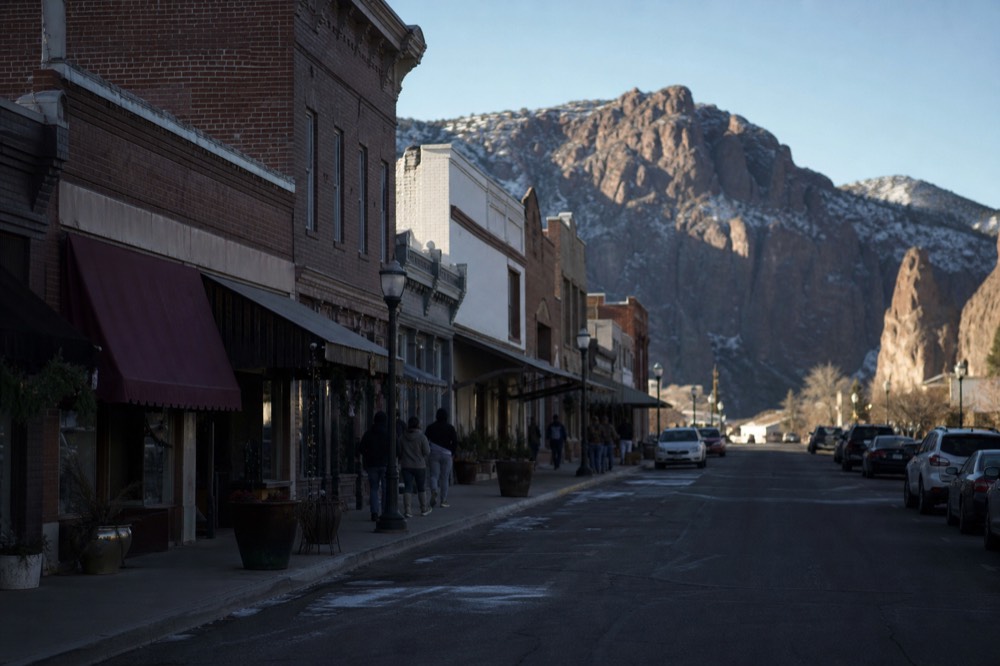
Jerome holds three of the region's most distinctive wine addresses: the Caduceus Cellars tasting room, the Original Jerome Winery, and Cabal Cellars. Caduceus runs Sunday through Thursday 11 am to 6 pm and Friday to Saturday 11 am to 7 pm, with a bottle shop stocking both the Caduceus and Merkin labels. It is about 45 minutes uphill from Sedona and no shared tour goes there.
Jerome is a former copper town welded to the side of Cleopatra Hill at around 5,200 feet, and the drive up is a series of tight switchbacks with a long drop on one side. It is a spectacular approach and a poor one to attempt after a tasting flight. That geography, more than any commercial reason, is why the shared vineyard tours leave it alone.
The draw is Caduceus Cellars, the project of Maynard James Keenan, whose wine work in this valley has done more to put Arizona on national wine lists than any marketing budget could. The Jerome room is small and busy and pours seriously. The Caduceus tasting room keeps its own hours and its own bottle allocations, and the Merkin side of the operation runs the Cottonwood hilltop facility and trattoria. The Original Jerome Winery and Cabal Cellars fill out the town's short but dense wine walk.
| Jerome address | Hours | What it is |
|---|---|---|
| Caduceus Cellars | Sun to Thu 11 am to 6 pm, Fri to Sat 11 am to 7 pm | Tasting room plus bottle shop for Caduceus and Merkin |
| Original Jerome Winery | Varies | Long-running town winery and tasting room |
| Cabal Cellars | Varies | Small-label tasting room on the town's wine walk |
The Jerome room's constraint is space rather than stock. It is a narrow storefront on a narrow street in a town where parking is a competitive sport, and on a Saturday afternoon in autumn you will queue. Going on a weekday morning, close to the 11 am open, is the difference between a conversation with whoever is pouring and a shoulder-to-shoulder ten minutes. The bottle shop side carries both the Caduceus and Merkin labels, so it doubles as the best single place in Arizona to buy wine you cannot get elsewhere.
Practically, Jerome works as a half-day of its own: drive up mid-morning, taste, eat, walk the town, come down before the light goes. Trying to bolt it onto a Page Springs afternoon is how people end up doing that switchback descent at dusk with three flights behind them. The whole Keenan wine world, Jerome room and Cottonwood hilltop together, gets its own treatment in the guide to Caduceus Cellars and Merkin Vineyards.
Which wineries do the tours actually visit?
Six wineries carry almost the entire shared-tour circuit: Javelina Leap, Oak Creek Vineyards, Alcantara, Cove Mesa, Page Springs Cellars and D.A. Ranch. Javelina Leap appears on the most itineraries. The Cottonwood strip and Jerome appear on none of the shared runs, and reaching either takes a private vehicle or your own car.
Once you see the pattern it is hard to unsee. The shared tours are optimising for a route that can be driven comfortably in six hours from Sedona pickup to Sedona drop, with room for a picnic or a sit-down lunch in the middle. The Page Springs and Cornville road plus Alcantara down at Camp Verde fits that. Anything requiring a mountain climb or a walkable street does not.
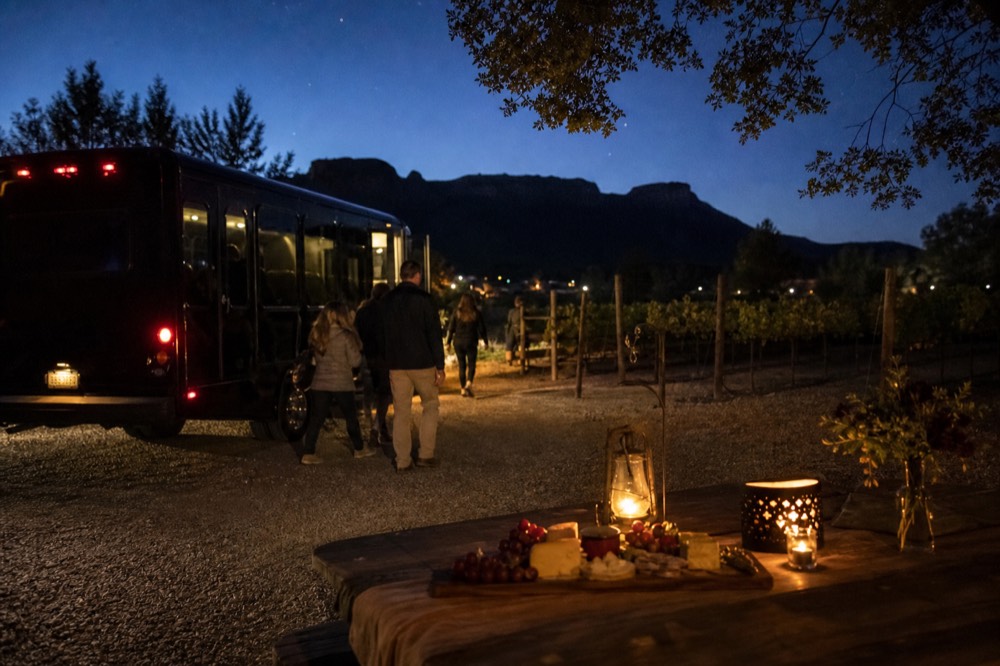
The differences between the shared runs are smaller than their marketing suggests, and they come down to three things: which four wineries, whether tasting fees are included, and what you eat. The limo-style bus covers Javelina Leap, Oak Creek Vineyards, Alcantara and Cove Mesa with a charcuterie picnic across six to seven hours from $109 per person, and you can check current dates and pricing if that mix is the one you want. The all-inclusive option trades breadth for depth: two wineries, five to six pours at each, every fee covered, made-to-order lunch, at $199. There is also a three-hour express at $79 that hits two vineyards including Javelina Leap with a charcuterie board, which is the right call if you have half a day rather than a full one.
| Winery | Limo bus | Bliss lunch | All-inclusive | Four vineyards | Private luxury | Voted best private |
|---|---|---|---|---|---|---|
| Javelina Leap | yes | yes | yes | varies | yes | varies |
| Oak Creek Vineyards | yes | no | no | varies | yes | no |
| Alcantara | yes | yes | no | varies | yes | yes |
| Cove Mesa | yes | yes | no | varies | yes | no |
| Page Springs Cellars | no | no | yes | varies | no | yes |
| D.A. Ranch | no | yes | no | varies | no | yes |
| Cottonwood strip | no | no | no | no | no | no |
| Jerome | no | no | no | no | no | no |
Across the twelve bookable tours running out of Sedona there are 2,424 traveller reviews, and from-prices spread from $79 per person to $472 for a private group vehicle. All but one cancel free, usually up to 24 hours ahead. The exception is the elite private ride that gives a full hour at each of Page Springs Cellars, D.A. Ranch and Oak Creek Vineyards, which is non-refundable, so read that listing carefully before you commit to a date. Most people booking their first trip here start with the shared vineyard lineup and work outward from there; the plain-English rundown of what tours exist is the two-minute version.
What does a tasting actually cost if you go on your own?
Self-driving means paying each winery directly, and the published rates are higher than most visitors budget for. Page Springs Cellars runs $39 to $57 for a tour with tastings, D.A. Ranch charges $55 for its vineyard walk with a four-wine tasting, and Merkin's hilltop barrel room experience starts around $30 including an estate tasting. Three stops at those rates lands near $130 per person before food or fuel.
That number is the one that reframes the whole self-drive versus tour question. Visitors tend to assume a guided day is the expensive option and the DIY version is thrifty. Once you total real published fees at real wineries, a $109 shared day that already includes a picnic and four stops stops looking like a premium and starts looking like a discount, and the $199 all-inclusive run genuinely covers fees you would otherwise pay one counter at a time.
The other cost is the one nobody prices: the designated driver. Somebody in your group pays the same fees, walks the same vineyard, and does not drink. On a $55 D.A. Ranch walk that stings.
| Doing it yourself | Published cost |
|---|---|
| Page Springs summer cellar tour, 4 tastings | $39 |
| Page Springs estate tour, 5 tastings | $45 |
| Page Springs harvest estate tour, 5 tastings | $57 |
| D.A. Ranch vineyard walk, 4-wine tasting, logo glass | $55 |
| Merkin Hilltop barrel room, incl. estate tasting | from $30 |
| Art of Wine flight, Uptown Sedona | from $15 |
| Three-stop valley day, per person, fees only | roughly $130 |
Compare that with the shared tours, which start at $79 for a three-hour express and $109 for a full-day four-winery run, and the gap closes fast. There is also a jeep-and-tasting combo that pairs a red rock backcountry run with a winery visit for people who cannot decide between the two halves of Sedona, and the listing carries current pricing for it.
What grapes grow here, and what should you expect in the glass?
Rhône and Italian varieties dominate the Verde Valley AVA. Syrah, Sangiovese, Barbera and Malvasia Bianca are the signatures, with Cabernet, Chardonnay, Picpoul Blanc, Petite Sirah and Seyval Blanc filling out the plantings. The high-desert day-night temperature swing over a 175 to 200 day season is what lets these grapes ripen without losing acid.
If you arrive expecting California, you will misread these wines. The valley's reds tend to be lighter in body and higher in acid than their alcohol level suggests, and its whites run drier and more mineral than the average American tasting room pours. That is a function of elevation and diurnal swing rather than a stylistic choice, though several winemakers here have leaned into it deliberately.
Malvasia Bianca is the grape I would send a first-timer to. It grows well here, it is aromatic without being sweet, and it tells you more about what this region can do than another Cabernet will. Picpoul Blanc and Seyval Blanc show up in smaller quantities and are worth asking about specifically, because they rarely make it into a standard flight.
| Grape | Type | Why it works here |
|---|---|---|
| Syrah | Red | Rhône variety suited to heat with cool nights, the valley's most planted red |
| Sangiovese | Red | Italian acid structure holds up in high-desert ripening |
| Barbera | Red | Naturally high acid, tolerates warm days |
| Malvasia Bianca | White | Aromatic, dry, the region's most distinctive white |
| Petite Sirah | Red | Deep colour and tannin, often blended |
| Picpoul Blanc | White | Acid-driven, small plantings, ask for it |
| Chardonnay | White | Grown here in a leaner style than most visitors expect |
| Seyval Blanc | White | Cold-tolerant hybrid, uncommon, worth trying |
| Cabernet | Red | Familiar variety, ripens on the warmer valley floor |
When should you visit, and does the season change which wineries are worth it?
Yes, and more than most regions. Harvest tours at Page Springs Cellars only run from mid-August, D.A. Ranch's vineyard walks operate Wednesday to Saturday year-round, and the vine rows themselves look completely different in April than in October. The valley's shoulder seasons, spring and late autumn, give the best combination of open rooms, comfortable temperatures and thin crowds.
Summer afternoons on the valley floor get genuinely hot, which is why so many tasting rooms schedule their best hours late and why Page Springs runs to 8 pm Thursday through Saturday. Winter is quiet, cool and often lovely, but some smaller rooms cut back their days and the drive home from Jerome in the dark is not a treat.
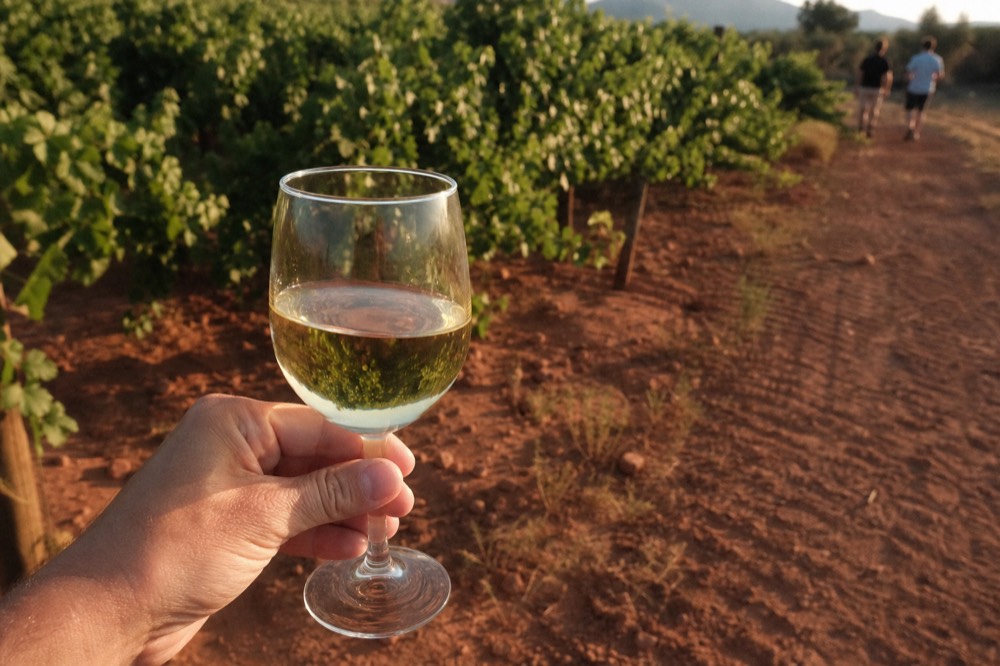
The light on the vines at Page Springs in late October is the thing I would plan a trip around if I only got one shot. Harvest is done or finishing, the leaves are turning, the creek is running, and the tasting rooms are relaxed rather than slammed. Book ahead anyway, because everyone else in Arizona has worked this out too.
Trail events cluster in spring and autumn, and the region's festival calendar is worth checking before you fix dates. I break the year down properly in the guide to the best time for Sedona wine tasting, and the mechanics of the signed route itself, passport app included, sit in the Verde Valley Wine Trail guide.
So which option is right for your trip?
If you want vines, take a tour or drive to Page Springs and Cornville. If you want variety and a walkable street, go to Cottonwood. If you want the most distinctive wine in the region, climb to Jerome. If you want to drink well without driving at all, stay in Sedona and use the three in-town rooms.
Those four sentences cover most visitors. The complication is that people rarely want only one of them, and the geography does not let you have all four in a day. Cottonwood and Jerome are close to each other and far from the vineyard cluster. The vineyard cluster is where the shared tours go. Sedona's rooms are where you end up anyway on the evening you arrive.
My default recommendation for a two-night trip: in-town rooms on arrival evening, a guided vineyard day for the middle day so nobody drives, and Cottonwood or Jerome on your own on the last morning before you leave. That sequence puts the drinking-heavy day in the hands of someone else and keeps your own driving sober. Most of the shared and private Sedona wine tours running out of town are built to slot into exactly that middle day.
For anyone who wants something other than a straight tasting circuit, the region also has a sommelier-led Verde River paddle that ends at Alcantara with a tasting credit, a first-class railroad car pairing Southwest wines with cheeses out of Clarkdale, and a vortex-and-vineyard hybrid. Those live under the wine adventure tours, and the highest-rated wine experience in the entire region is the kayak day rather than any of the buses, which is a genuinely awkward fact for a site about wine tours to publish and is nonetheless true.
Frequently asked questions
How many wineries are actually in Sedona itself?
Zero, in the production sense. Sedona has three well-established in-town tasting rooms plus a fourth operating through 2026, but no commercial vineyard of any size inside city limits. Every bottle poured in town was grown somewhere else, usually in the Verde Valley AVA 20 to 40 minutes southwest.
Can a wine tour from Sedona take me to Jerome or Cottonwood?
Not a shared one. Every shared tour from Sedona routes through the Page Springs, Cornville and Camp Verde vineyards, because those stops have the parking and capacity a group vehicle needs. Jerome sits at the top of a switchback climb and Cottonwood is a walking strip, so both need either your own car or a private tour that will build a custom route.
Are tasting fees included on Sedona wine tours?
It depends entirely on the tour, and the difference is large. Some shared runs include every tasting fee and a made-to-order lunch in the ticket price; others cover transport and a picnic while you pay each winery at the counter. The listing itemises which applies, so check it before comparing two prices as if they cover the same thing.
What is the minimum age for a tasting in the Verde Valley?
Every tasting is 21 and over with valid ID, without exception. Whether a younger passenger may ride along on a tour without tasting is a separate question and each operator sets its own policy, stated on its own listing. Page Springs Cellars does let ages 12 to 17 join its tours at no charge on the non-tasting version.
Is it cheaper to drive the wineries myself?
Often not, once you total the real fees. Page Springs tours run $39 to $57 with tastings and D.A. Ranch charges $55 for its vineyard walk, so three stops sits near $130 per person before food or fuel. A shared four-winery day starts at $109 with a picnic included, and somebody in a self-drive group has to stay sober all day.
Which winery should I pick if I only have time for one?
Page Springs Cellars if you want the most complete experience, because it runs real tours through the cellar and estate rather than just a counter. D.A. Ranch if you want to actually walk a vineyard. Caduceus in Jerome if you want the single most distinctive wine in Arizona and do not mind the drive.