What Wine Is Sedona Known For?
Syrah, Sangiovese, Barbera and Malvasia Bianca, grown in a federal appellation only established in 2021. What the Verde Valley plants, and why.
 By Patricia Collins, Sedona wine tour specialist & Verde Valley experience guide
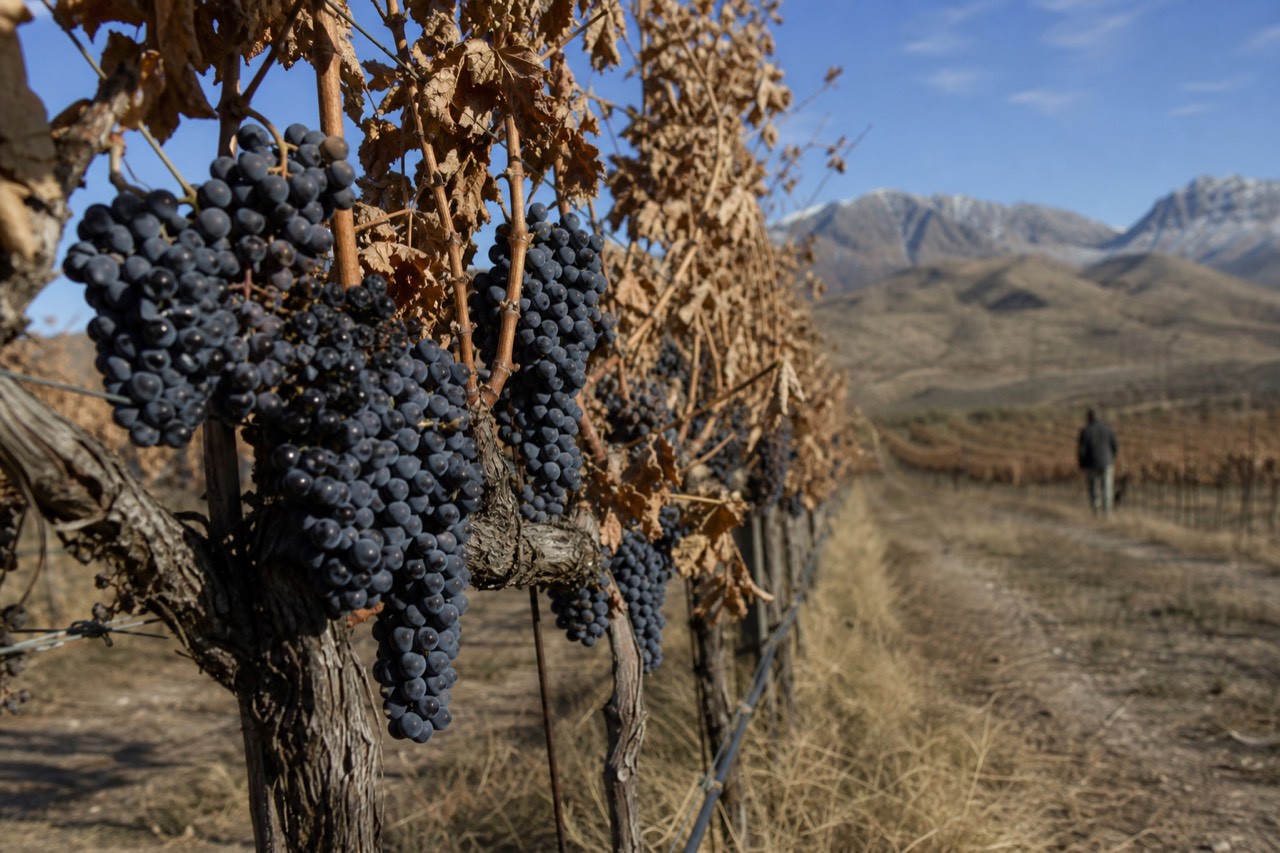
Ask a Napa drinker to guess what Arizona plants and they will say Cabernet. The answer is Syrah, and it has been pulling ahead for years. Walk the rows at Page Springs in late October and the fruit still hanging is dark, small-berried Rhône material, not the Bordeaux set, because that is what a 175 to 200 day growing season at this elevation actually ripens.
What wine is Sedona known for?
Rhône and Italian varieties. Syrah leads, and was Arizona's top grape by acreage in 2025. Behind it sit Sangiovese, Barbera, Petite Sirah and Cabernet on the red side, with Malvasia Bianca, Viognier, Vermentino, Chardonnay, Picpoul Blanc and Seyval Blanc among the whites.
That grape list is the single most useful thing to carry into a tasting room here, because it tells you what to ask for. A counter pouring six wines will usually have at least two Rhône reds and one aromatic Italian white, and those are the pours that show you the region rather than a house style borrowed from somewhere else.
More than 40 varieties are grown across the appellation in total, which sounds chaotic and mostly is. Arizona's wine industry is young enough that growers are still testing what survives, and a good number of blocks are effectively field trials. That is why two neighbouring estates can pour wildly different lineups. It is also why blends are common: a producer with small plantings of six things has every reason to combine them.
Is Sedona actually known for wine, or is that just marketing?
Both, honestly. Sedona itself is known for red rock, not viticulture, and it grows almost no grapes. The wine reputation belongs to the Verde Valley below it, which holds a real federal appellation, 24 commercial vineyards and 11 wineries. Sedona is the bed and the tasting room, not the farm.
The federal recognition is the part that separates this from a tourist claim. The Verde Valley AVA was established on November 9, 2021 by the Alcohol and Tobacco Tax and Trade Bureau, making it Arizona's third appellation and the 260th in the United States. An AVA is a boundary, not a quality medal, but the petition process demands real evidence that the area's soils, elevation and climate are distinct. Somebody had to prove this ground grows differently, and they did.
Recognition beyond the paperwork is arriving too. The Verde Valley Wine Festival took a 2025 Arizona Travel Award, and there is now an approved Arizona Wine Trail specialty license plate, which is a small thing that says something about how the state sees this industry.
So when a tour is sold as a Sedona wine day, read it as a Verde Valley day with a Sedona pickup. The distinction matters for planning more than for the glass, and I laid out the actual minutes in how far the wineries really are.
How many wineries are in Sedona?
Sedona proper has three notable tasting rooms and effectively no vineyards. The Verde Valley AVA holds 11 wineries, 24 vineyards and 25 tasting rooms spread across Cottonwood, Cornville, Page Springs, Camp Verde, Clarkdale and Jerome, on roughly 125 planted acres inside a 200 square mile boundary.
The split confuses people constantly, so here is the shape of it.
| Where | What is there | Examples |
|---|---|---|
| Sedona (in town) | tasting rooms only, no estates | Art of Wine, Vino di Sedona, Winery 101 |
| Page Springs / Cornville | creek-road estate cluster | Page Springs Cellars, Javelina Leap, Oak Creek Vineyards |
| Cottonwood (Old Town) | walkable tasting strip | Arizona Stronghold, Merkin Vineyards |
| Camp Verde | river confluence estate | Alcantara Vineyards |
| Clarkdale | estates plus the rail depot | Cabal Cellars, D.A. Ranch |
| Jerome | hillside town rooms | Caduceus Cellars, the Original Jerome Winery |
Twenty-five tasting rooms and 125 planted acres is a telling ratio. There is far more pouring capacity than farming capacity, which means plenty of what you taste in the valley is made from fruit grown elsewhere in Arizona, particularly the Willcox area to the southeast. Nobody hides this, but nobody volunteers it either. If estate-grown fruit matters to you, ask at the counter. The in-town rooms are covered separately in the Sedona tasting room guide, and the full regional list sits in the complete winery rundown.
Why do Rhône and Italian grapes work here?
Because they tolerate heat and ripen inside a 175 to 200 day growing season at high desert elevation. Syrah, Sangiovese, Barbera and Malvasia Bianca all evolved in hot, dry, sun-heavy places with big day-to-night temperature swings, which is a fair description of the Verde Valley floor.
I am not going to hand you a flavour wheel that no source supports, because plenty of sites will and most of it is invented. What I can tell you is the growing logic, and the growing logic is not subtle. Bordeaux varieties want a longer, milder hang. Rhône and Italian varieties do their best work in exactly the conditions that would cook something more delicate, and they hold acidity through heat, which matters when the afternoons are what they are here.
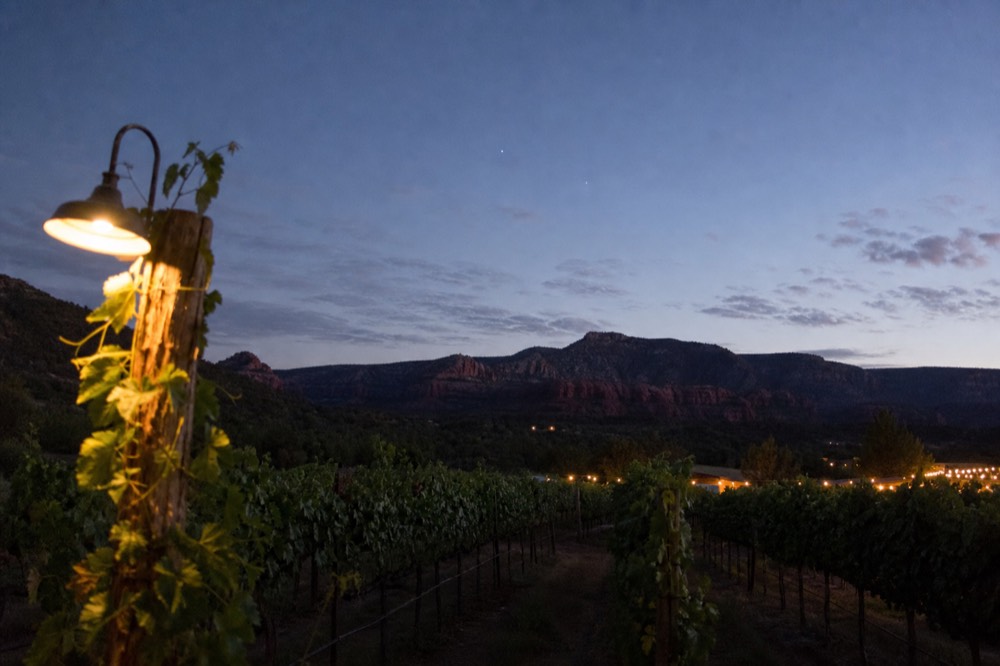
The other half of the story is water and slope. Vineyards here sit near the creeks and the Verde River, which is why the plantings cluster in Page Springs, Cornville and around the confluence rather than spreading evenly across 200 square miles. Drive the valley and you can read the farming straight off the landscape: vines where the water is, scrub everywhere else.
If you want to taste the same variety at two producers back to back, which is the fastest way to learn a region, a private day helps because you control the timing. One private listing gives you a full hour at each of three estates, and you can see what that longer format costs, though note it is the one listing in the lineup that does not refund.
Two sources worth reading directly if you want the primary material: the appellation's own media kit at the Verde Valley AVA, and the University of Arizona's reporting on the variety spread in Arizona vineyards.
Which producers best represent the style?
Page Springs Cellars for the Rhône program and the creek-side setting, Caduceus Cellars and Merkin Vineyards for the Italian side, Javelina Leap for a small estate counter, and Alcantara for the river-confluence plantings. Between them they cover most of what the valley does.
| Producer | Where | Known for | Reachable on |
|---|---|---|---|
| Page Springs Cellars | Cornville | Rhône varieties, creek-side terraces | all-inclusive, private and shared days |
| Javelina Leap | Cornville | small estate counter plus bistro | the limo bus, express and vortex days |
| Alcantara Vineyards | Camp Verde | Verde River confluence plantings | limo bus, luxury van, kayak day |
| Caduceus Cellars | Jerome | Italian varieties, hillside town room | independent visits |
| Merkin Vineyards | Cottonwood | tasting room with an osteria | independent visits |
| D.A. Ranch | Clarkdale | estate visits on private itineraries | private tours |
Worth knowing before you plan a route: these six are not all reachable on the same day. The Cornville estates and Camp Verde sit on one side of the valley, Jerome climbs a mountain on the other, and Old Town Cottonwood is its own walkable afternoon. Most packaged days pick a lane and stay in it, which is the right call.
Caduceus and Merkin are the same wine world, run by Maynard James Keenan, and they pull a crowd that did not arrive for viticulture. It is still serious wine. Their story sits in the Jerome wine world guide, and the creek-road cluster gets its own treatment in the Page Springs and Cornville guide.
How do you taste the region properly in one day?
Three estates, not five. Give each stop 45 minutes to an hour, ask for the Rhône reds and one aromatic white at every counter, and compare the same variety across producers. Book a tour that covers tasting fees so you are comparing wine rather than watching a tab.
The single most common mistake is stacking stops. Four wineries in six hours sounds efficient and reads well on a listing, but by the third counter most people have stopped tasting and started drinking. If your goal is to understand what this valley does with Syrah, three properly paced stops beat five rushed ones every time.
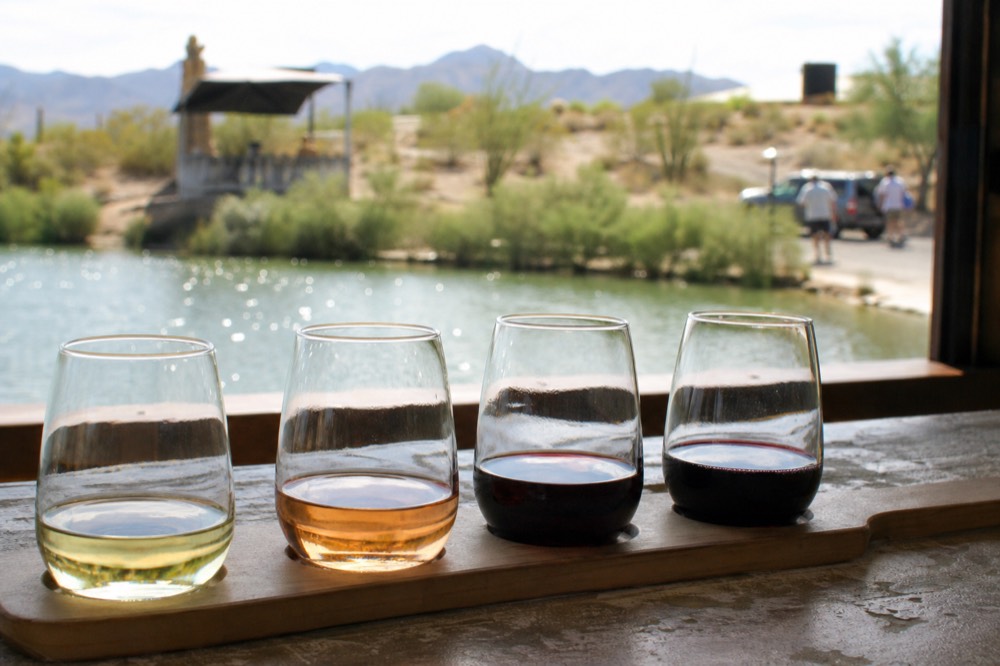
Book with the fees included where you can. A day where every pour is already covered removes the small friction that makes people skip the flight they were curious about, and the all-inclusive format runs five to six pours per winery, which is enough to see a producer's range rather than their two safest bottles. You can check current dates and pricing and compare it against the rest of the shared vineyard runs.
One last piece of etiquette that guests get wrong: every tasting here is 21 and over with ID, no flexibility on that. Whether a younger passenger can ride along is a separate question, set by each operator on its own listing. If you are timing a trip around harvest or trying to avoid the crush of festival weekends, the month-by-month tasting calendar has the seasonal detail. And if you would rather the wine came attached to something else entirely, the paddle and the railroad both sit under the wine adventure days.